Inside Mistura: How Ricardo de Montreuil Brought 1960s Peru Back to Life


 Apple Podcasts
 Spotify
 Amazon Music
 Overcast
 Castro
 iHeartRadio
 PocketCasts
 Castbox
 Podchaser
 RSS Feed
 Director Ricardo de Montreuil joins Michael for a cinematic conversation about Mistura, the Peruvian film that blends food, memory, identity, and virtual production to bring 1960s Lima back to life. Together, they explore the emotional and cultural heartbeat of the story — from Afro‑Peruvian heritage to the flavors that shape who we are, individually and collectively.
As Ricardo reflects on the personal journey of resurrecting a city that once flourished, the conversation opens into something larger: a meditation on belonging, reinvention, and the stories we inherit. This episode is a warm, thoughtful reminder that honoring our past and imagining our future are both acts of courage — and that cinema has the power to bridge cultures, spark understanding, and reconnect us to the places that made us.
A rich, unhurried dialogue about identity, artistry, and the worlds we rebuild when memory becomes a map.
Takeaways:
- The film 'Mistura' serves as a poignant love letter to Peru, intertwining its rich culinary heritage with themes of identity and memory.
- Ricardo de Montreuil emphasizes the significance of diversity in Peruvian culture, showcasing how various influences have shaped its gastronomy.
- The personal journey of the director reflects a broader narrative about belonging and the emotional connections to one's roots and history.
- Through 'Mistura', viewers are invited to explore the transformative power of storytelling, particularly in relation to cultural reinvention and acceptance.
- The film highlights the importance of embracing one's authentic self while navigating societal expectations and prejudices, which is a universal theme.
- Cinematic techniques, such as virtual production, were employed to recreate the vibrant essence of 1960s Lima, enhancing the film's nostalgic atmosphere.
Find us on Apple, Spotify or your favorite listening platform; visit us on our YouTube channel Find everything "One More Thing" here: https://taplink.cc/beforeyougopodcast
Want to be a guest on One More Thing Before You Go? Send Michael Herst a message on PodMatch, here: PODMATCH Proud member of the Podmatch Network of Top Rated- Podcasts
This podcast uses the following third-party services for analysis:
Podcorn - https://podcorn.com/privacy
Michael Herst
Some stories aren't just written, they're remembered. My guest today grew up in Peru, left at 19, and spent years carrying out nostalgia for a world he eventually rebuilt brilliantly through cinema.His film Mysterious is a love letter to Peru, its food, its culture, its identity, and so much more. Stay tuned. Today we step into that world. I'm your host, Michael Herst. Welcome to one more thing before you go.Today I'm joined by Ricardo de Montreal. He's the director, the writer and the visionary behind the brilliant film Mastura.And I can't wait to dug deep down into the middle of this because it's such an amazing project that you created. Ricardo, welcome to the show.
Ricardo de Montreuil
Thank you, Michael. Thank you. Thank you very much. Thank you for having us.
Michael Herst
You know, you, you have a very unique opportunity.My wife and I did last night to watch Mystery and I have to say we loved the artistic, brilliantly crafted love story from numerous perspectives, frequently tied together through multi layered storytelling. It takes on a journey of discovery, reinvention, how we all fit together in life. And just thank you for bringing that to the world.
Ricardo de Montreuil
Well, thank you very much.Yeah, I wanted to tell a story that could prove that the diversity of a country could make it better, you know, and I felt that Peruvian food, which is the fusion, right, of all these cultures through 500 years of migration, you know, it started with the Incas that they met with the Spanish, you know, they mix their food. Then after that the Africans arrived, then the Chinese, then the French and Italians, then the Japanese, most recently the Venezuelans.And the greatness of Peruvian gastronomy lies on its diversity. If you take one of those cultures out of, wouldn't be as good. It wouldn't taste like Peru.
Michael Herst
I agree with that. I think that, you know, I grew up in an Italian environment. My, my sister even married the guy from Rome and he brought all his friends over.And I was immersed in a different opportunity for enjoying food and culture and conversation at the dinner table.Because of that, it was different than here in the United States and how they presented the food, how we ate the food, the conversations that were held at the table. And that's what I really loved about this film too, because it was, I keep saying, amazing because it just.
Ricardo de Montreuil
Oh, thank you so much.
Michael Herst
In regard to intermingling all that and presenting that to us as if we're sitting at the table.
Ricardo de Montreuil
Yes. Yeah, yeah. I mean, I feel that. I mean, it was a little bit.Sorry, it was a little bit hard to tell a story, you know, that talks about inclusion, tolerance, diversity without Showing the. How you say. How would you say that? Like the negative aspects, right? Like. Like. Like the hatred.
Michael Herst
And.
Ricardo de Montreuil
And I wanted to tell it from a. From show the positive aspects of it, right? Like how it can enrich a culture and how similar we are, right? How at the.At the end, we're just humans trying to do the best, you know, for our families.And I feel like telling stories like these, showing a little bit our differences, you know, how maybe we can complement each other, could help make people, you know, that watch the film, leave the theater, maybe with their minds a little bit more open, you know, maybe a little bit more tolerant. That was my purpose. I was just very frustrated by the divisive rhetoric of our leaders worldwide, how it has become a widespread.And so, you know, they are focusing so much on trying to divide us, you know, to put us on teams and how much also. And we're falling for it. You know, we. I'm so passionate about a party, about a candidate, somebody that you don't know.You know, we put our hands on fire for them without knowing these people, without, like, you know, like, I mean, we shouldn't do that. I mean, you know, like, who knows? I mean, these people are salesmen, you know, there's.We don't know if they're saying it's true or not until they're in power, you know.
Michael Herst
Well, you know, it's interesting because, you know, we don't realize that the same troubles we're having here in the United States with that divisiveness and how they're trying to divide us is happening all over the world. You don't. We don't think about that. We don't think that that's what takes place in those areas.I think you pointed that out really well in this film, as well as the class differences and, you know, the. Again, something that we hadn't thought about that existed in these areas. So, yeah, I think it was what. I mean, you left Peru at 19?At 19, or usually before then?
Ricardo de Montreuil
No, I was 19. I went to the States. Right now I'm in Peru shooting a commercial, but I live in Los Angeles. But I went to study film.And right out of college, mtv Latin America, they were based in Miami. They hired me as their art director for their marketing department. So thanks to mtv, I ended up staying in the States.
Michael Herst
When you left Peru, do you think there's what stayed with you? What's the thing that you couldn't shake, like, even years later, that kind of brought you back. Back to Peru to create, like, this film and others,.
Ricardo de Montreuil
I don't know. I mean, I guess my grandparents divorced in the 60s, in the 60s. And I used that idea, the inciting incident for this film.So I. I built this film using a. Let's say, fake memories, right? Because I grew up hearing those stories. They divorced, like, a decade before I was born. So I didn't live through it.But, you know, I heard these stories. I saw these pictures from the 60s, and I was always very intrigued, you know, by the hairdos and the makeup.You know, it was very dramatic, very fashionable. And so. And also the 60s was a decade that Lima, Peru, was doing relatively well, you know, economically, and.And the country was, like, very progressive. You know, we had the first surfing tournament in the world back then. It was in Lima, and we won.And then we had, like, this punk band that we play on the film called Los Pykos, which are credited to be the first punk band in the world before, like, 10 years before the British started playing punk music. So, but.But what was happening in Lima, you know, and the life that a few Peruvians were living there was a minority, was not reflected on the countryside. Right.And the fact that the government was completely ignoring, you know, the problems that most of the people were having that took the country into, like, a economic and social crisis in the 80s and early 90s, you know, where our economy collapsed and. And we had these terrorist groups that became some of the most powerful terrorist groups in the world.Thankfully, that's over and hopefully, I hope that we learn from that.
Michael Herst
I hope that we've all learned from that as society, not just that perspective. Why? Well, how did Peru like the food? Here's what I found really fascinating. I love food, like we all, but good food.And the way that you've kind of intermingled the different cultures within this film with food. How did Peru, the food and the music and the culture shape your artistic voice?Did that come from your grandparents, from those pictures, from those things, those conversations?
Ricardo de Montreuil
No food. I mean, I think. I mean, today the best restaurant in the world is Maido. It's a Japanese Peruvian restaurant based in Lima.It's the number one on the Pellegrino list. I believe there's another. I think the sixth one, best restaurant is Kolle, which is also a Peruvian restaurant.Lima is the only city in the world that has two of the best restaurants in the top 10. And yes, it's.So all this happened, you know, started like, I don't know, I think maybe 30 years ago because of a chef that went to Study cuisine in France. Permanent chef. And when he returned, he realized the potential that Peruvian food had. I grew up, obviously, eating Peruvian food.I grew up in Trujillo, which is a coastal town up north. North. That's where ceviche is from. Ceviche was created by these pre Incan cultures that were marinating raw fish with. With citric fruits. Not, not.Not limes. We. There were not limes in. In back then in the Americas.But I grew up eating these foods that were amazing, you know, like, I mean, it was a mix of cultures. We knew, like we have our own Chinese culture food to have our own Japanese food, our own Italian. And it's just like these migrants, right, that.That mingle and mix and adapted their foods to Peruvian ingredients. And I always. I mean, I also felt that we had some of one of the best foods in the world.When I moved to the States, I remember, like, a lot of people that was familiar with Peruvian food, even though it was not what it is today. Right. Like, we didn't have the restaurants that we have today or the gastronomic culture still.Everybody that knew Peruvian food would tell me, oh, you're from Peru. I love Peruvian food. It's my favorite. You could tell that people was a food that people already loved.You know, what this chef did, or this chef, Gaston Acurio, he came back from France, he opened a French restaurant in Lima. The restaurant was not what he expected, and turned his restaurant into a Peruvian restaurant. And that's when he found success, you know, when he.When he embraced his roots, you know, when he became more personal. And they say that, you know, I mean, one of the themes of the film is that, you know, that the most personal the art of an artist is.It's the most universal. And that happened to Gaston. And I use that also as part of the film structure for my stura.
Michael Herst
I think you did it from the perspective of your main character.She kind of embraced it from that perspective, I think, because she starting off with her father's favorite recipes were French, and then intermingled the other Peruvian and the other cultural food, the Afro food, into that. And then that turned her restaurant completely. I thought that fascinating the way it was presented. And you did that smoothly, actually. It was just.You took us on a journey from the beginning. You took us on a journey that just kind of embraced us, enthralled us.And I say us as my wife and I, as we watched it, enthralled us with that journey. We really.It also made us hungry, you know, it's one of those things you kind of go, yeah, I think I would like to try that because there's things that I don't think I've ever eaten. Peruvian food.
Ricardo de Montreuil
Where are you based, Michael?
Michael Herst
Based in Phoenix, Arizona.
Ricardo de Montreuil
Phoenix, Arizona. I'm sure, like, you probably can find a good restaurant there. I mean, now more widespread, you know, especially on the East Coast.Not so much on the west coast, but there's still some good restaurants in California and the West Coast.
Michael Herst
Well, our kids live in California, so it would give us an excuse to visit California and try something new. Yeah, I think so. When you moved from Peru, had you always wanted to be a filmmaker?
Ricardo de Montreuil
Yeah, yeah. Since I remember I was inclined to the arts. I started painting. Actually.I study under a renowned Peruvian painter when I was a kid, and then I study at the Fine Art school in Trujillo. But I mean, I don't know. I mean, like, when I was six, I watched the making of Superman.I mean, I watched the movie, but I also watched the making of. And it was magic to me, you know, it was amazing to see all these artists coming together to create a single vision.And I mean, to me, not just a product and what a movie can do to an audience, but the process fascinated me. So Since I was 6, I wanted to be a director. I just didn't know how, you know.Luckily, life took me to this path and allowed me to start making films,.
Michael Herst
Which is a really good thing. When did you realize that you weren't just making film, though, but you were kind of rebuilding a world in this particular.You come at it in a very unique opportunity, I think, and being able to use the digital atmosphere of recreating what you recreated.
Ricardo de Montreuil
Yeah.
Michael Herst
When did you realize you weren't just making film in this particular case, you were kind of rebuilding a world.
Ricardo de Montreuil
I don't know. I mean. I mean, Misura is the first film that I wrote, right. And I, I. This is my fourth film that my first four films were written by.By different writers. And when you direct the material of somebody else that, you know, there's something.Usually things gets lost, you know, in not translation, but interpretation. And with Mystura, I had the idea very clearly from the beginning.And what was great about this is that I use people that I knew to create some of the archetypes of the characters. So therefore their voices were real. Even though the characters are fiction, are not real, their voices were real.And that helped me create, I think, a world that could feel real and tangible. Also. What was great is that when I was Directing the actors, I knew exactly what. Every line, every pause. Right.I could be very specific on the direction, also edited the film and. Which was great because with that I was able to make sure that the original intention of every word got to the finish line.You know, that a lot of times, you know, when you work with an editor, the editor might interpret your story differently, might give you, like a different version of what you were trying to say. So I really enjoyed to have control of the entire process.
Michael Herst
I think that from a director's point as well as a writer's point, I think that that gives you a unique approach.Dill, as you said, you kind of keep the consistency with your film and you have the true vision of what your film is going to be and what you want it to be. A lot of writers have that opportunity to hand their script over, and sometimes it just doesn't get.It doesn't get brought across like it's supposed to. That creativity, it is like an opportunity. Where did Mystura begin for you? When was the idea of Mystura?
Ricardo de Montreuil
Yeah, well, it was the beginning of 2022, and I was just fed up by our politicians. I just, I just. And I really.My original intention was I just wanted to tell a story that could show, you know, the opposite of what they were saying, you know, that they were trying to separate us, trying to. To say that our differences, you know, like, like, like that. That we cannot live together. That is either them or us. Right. And I don't know.Luckily, I. I stumbled into the idea of using Peruvian food to do this, you know, and I use, as I said, my grandparents divorced as the inciting incident for. For this film, you know, and then, I mean, it's not based on my grandparents. My grandmother never. Doesn't. Never cooked. She never remarried, actually.Her parents are British, not French. But it was the trauma. Right.Then after making the movie, I realized that a lot of women empathize with Norma because many women have similar experience to what she went through.
Michael Herst
Yeah. Especially in that time era. The time era is a lot different. Even like here in America, women. I grew up with a single mother.My father died at a very early age, so my mom raised three kids by herself. And even as late as up until 1974, 75, something like that.You couldn't even rent an apartment without a signature from somebody or have a checking account. Yes.
Ricardo de Montreuil
Yeah. I mean, I mean, in the film, the Oscar, you know, who's a normal chauffeur, who's an Afro? An African. African. Peruvian. Afro.Peruvian man who has lived discrimination and prejudice. And, you know, he empathizes with Norma because he sees how society, Lima, society, once she gets.Once her husband leaves her, how she becomes antagonized like a.She becomes rejected, you know, discriminated because she was a woman, you know, and even though her husband is the one that cheated, she was the one blamed for it. So. Yeah, I mean, it's interesting. Yeah. Because it was a time where women didn't have the same rights and possibilities that they have today.And I still. I don't think we're 100% there.
Michael Herst
I agree with that. Even here, we're not 100% there yet. It. We're not there the United States or anywhere.There's a lot of places in the world that still feel that way, unfortunately, or they are digressing back. And I think it's a very unfortunate thing, at least growing up with a single mother and watching it real time in the 60s and the 70s, it just.It's unfortunate from that perspective. I know that you wanted to capture Lima.How challenging was it to kind of create a city that now only exists in memories and photographs and things like that? Because it's changed since your grandparents were there and you were there, correct?
Ricardo de Montreuil
Yes. Yeah, it has changed a lot. We were lucky to find a house. That's where most of the movie happens, that it's a house that was built in early 1900s.I think it was 1920 something. And it's a beautiful house, you know, that has the architecture of Miraflores. That's the area in Lima where the story happens.
Michael Herst
So.
Ricardo de Montreuil
And I really wanted to feature, you know, the local culture and architecture. So. And the house was already furnished. And because the house is used for events, people rented for weddings or any kind of events.So it was perfect because we. The house. Nobody was living there. It was fully furnished, and we could. And it was a very big house, so that we could take over and use it as the.As a base for our film, you know, base camp. So, yes, we were very lucky in that sense.And then we use a little bit of technology to, you know, like, for example, when Norma is driving, you know, through the city, or. Sorry, Oscar is driving through the city, or, well, Norma D. And also we used.I think I forgot what it's called, but those LED screens, you know, that were used on the Mandalorian, the city, we had to recreate it digitally because, yeah, the city today looks very different. And some of the establishing shots, obviously, we use drone shots of the coast.So the Ocean is real, the sky is real, but the city, you know, was recreated digitally, like almost.
Michael Herst
Almost a large scale green screen, but more. More in depth than that. Well, you did it brilliantly because you can't. It's seamless when you watch.
Ricardo de Montreuil
Oh, thank you.
Michael Herst
It works in such a way that you feel that you're there and it's giving you the same feeling and the opportunity. What I. That was kind of unique and nice that you're able to locate a house that just fit you perfectly.
Ricardo de Montreuil
Yes. Yeah. No, we were very lucky. I mean, yeah, it was a gamble. I mean, that was the. Was.We started a movie with that assumption that we will find a house, and luckily there was one that worked perfectly.
Michael Herst
Universe answered you. It's a story that needed to be told. So I think the universe answered you.
Ricardo de Montreuil
Maybe. Yeah. I mean. I mean, I couldn't be happier with the film. I work with Barbara Mori, the actress that plays Norma. She's a huge star in Latin America.Like, she's massive, you know, And I made my first film with her when we were. I think Barbara was like 24 and I was 29, you know, and it was a small film called La Mujere Mermano. It was. It cost like $250,000. Very small film.But I think. I mean, we did a good job. You know, it was a decent film. It had a beautiful photography and. And it became a huge hit in Latin America.We got like a wide release by Fox. It was massive. Like, you know, a massive premiere in Mexico.We had a wide release in the States as well, but with Lionsgate, and the movie ended up making a lot of money and it was a very intense experience. Right. For me, I mean, we didn't expect that. We thought we were gonna make this little film, go to festivals, try to sell it.That movie didn't go to a single festival. It was released before, you know, he got a chance to go to a festival.So I think because of that experience, and it was a positive experience, Barbara and I, we stayed in touch through the years.So when I started writing that film before actually before I started writing the film, I called her and I said, barbara, you know, I have this idea, you know, I think it's. I think it's a. It's a beautiful idea to tell. Right. She's a person. Barbara is a. Not just a beautiful person on the outside, but also on the inside.She has, you know, her charities and she. She very, like, socially conscious. So she responded immediately to the idea.And I started writing the script and Sending her pages, and she would give me notes on the character, which was great, you know, because I'm telling the story of a woman, so I really needed that, that female point of view, and she, you know, make her character richer and more real.
Michael Herst
Yeah, that's pretty cool. That's actually really cool. She's. My wife and I were watching, and we thought. We. We thought stunning woman. She.
Ricardo de Montreuil
Yeah.
Michael Herst
A cross between maybe Sophia Loren and. Who would my wife say? Sophie Loren and Natalie Wood.
Ricardo de Montreuil
Yeah. Yeah. I mean, yeah, she looks like a. Like a. She's a movie star.
Michael Herst
Absolutely. Her character was brilliant in this portrayal because she did it really, really, really well. I know that her French, Peruvian identity.I like the fact that she expressed it through food. And it's very subtle, the way that you present it, the way she pulls out the.You know, they find the book, and she talks about her father's cooking and her recipes and watching them grow up and things like this. And then, you know, Oscar pulls out the. Kind of. The recipe. Can't see my hands moving around.Pulls out the recipe book, you know, and he starts looking through this recipe book, and it's very subtle. It's subtle. How do you think about food as a reflection of who she is and who she is becoming?Because if I can give this secret away, we can cut this out if you don't want it in there. But I like how she. Some of her friends are saying that, you know, you don't cook, you don't do this, you don't do that.You know, she's supposed to be this trophy wife, basically. And you have servants cook, and you have other people cook, but you don't cook. But then she kind of embraces that and she runs with it.
Ricardo de Montreuil
Yeah, yeah. I mean, it's. Back then, restaurants were not what they are today. Right. Like, now chefs are celebrated, and they become celebrities.And food is much more celebrated today than back then. So. Yeah, I mean, back then, if, like, people would only go out to eat to French and Italian restaurants, right? Like, that was it, like.No, there were. There were no. And every other restaurants were, you know, like, Chinese, Japanese was. Were very uncommon.There were a few, but they were not, you know, like. They would call them criollos or Creole food. You know, Creole, Peruvian, Creole. People look down at them. You know, people love them, but they.So they were socially, you know. What's the word? Like, frowned upon. You know, like, not really respected. So, sorry, I went on a tangent. What was the question, Michael? Sorry.
Michael Herst
Oh, the fact that her French poet, Peruvian Integration with. With how she embraces that when, when from a woman's perspective, she and her friends kind of emphasized that, you know, you.You're not supposed to cook, you're not supposed to do this, you're not supposed to do that, you're supposed to do something else.
Ricardo de Montreuil
And also, I mean, people in Lima, you know, so there's people that lives in a bubble, right. In this upper class bubble, especially back, back in those days that. And they, they were ignorant to their own country. Right.Like, they were just looking inwards, never looking to outside of that bubble and like normal. Like, you know, there was people that didn't have tried some of the Peruvian foods and some of the Peruvian, like quinoa, for example.Quinoa was not like fully incorporated into the Peruvian diet until the 90s, I think before, like, it was seen as more like a food for people in the countryside.You know, what these chefs did in Peru, you know, like how they elevated the Peruvian gastronomy and they realized that if there's something that unites all provinces, their love for their food regarding regard, regardless of where it comes from. And actually they have united a country that, you know, through its history has been divided. So. Yeah.So Peruvian food, it was gastronomy's proof that gastronomy can make a society better.
Michael Herst
Well, and I think that, you know, Peruvian cuisine isn't just food is like you say, it's history. It's a classic migration and memory.And I think you say that about the Peruvian food within the film itself because it shows that they do embrace it and it is an experience and it's got history to it. And you don't think about Inca, you don't think about that.You know, you don't think about those kind of things or whether or not, I mean, I don't know if they do that as much here. They kind of, I guess they would kind of, kind of, kind of separate that as did more. This is more country food and this.
Ricardo de Montreuil
Is more, I think, a larger country. Right. Like the States, I mean, like, so it's massive. So maybe that. That integration didn't get us. Didn't.Didn't have a chance to happen like it did in Peru.
Michael Herst
Yeah. From that perspective.
Ricardo de Montreuil
But still, I mean, the States has a, you know, I love Southern food. Sorry, food from New Orleans. You know, I think like, it's a. I think the States have also amazing cuisine and gastronomy.
Michael Herst
Yeah, well. And I, you know, obviously New Orleans is. Also has a very high French integration within their cuisine as well. And they they combine that with a.
Ricardo de Montreuil
Little bit of southern French, French and Africa. And African as well, I think, like, you know, has that French, France and African mixture.That Grace is a very exciting version of French food, I guess.
Michael Herst
Yeah.
Ricardo de Montreuil
You know, a more spicy, more daring, you know, more flavorful from that perspective.
Michael Herst
Yeah. When I look at Oscar, Oscar's world, Nora's world was.We get a very good understanding of Nora's world and where it's coming from and the class separation, the distinguished separation, and then her struggle as a woman that is growing up or not growing between two, grow from her experience. Oscar's world. You know, I really didn't think about when I say this. I grew up in the 60s here in the United States, the 1670s.So I'm very familiar with the. With the culture, class, with, you know, racism and how certain individuals are being treated and so forth.Luckily, I had a father that taught me people are people, no matter what color they are, where they come from, what religion they are. My father taught me to treat people like people, not separate them by color or class or which is.
Ricardo de Montreuil
Which is great, because racism is taught.
Michael Herst
Yeah.
Ricardo de Montreuil
Like, we're not. We are not born racist. That's something that's taught by society.
Michael Herst
Absolutely. And I think it didn't cross my mind that that takes place not only here in the United States, but it takes place outside the United States as well.
Ricardo de Montreuil
Yeah, yeah. No, it's very, very common theme. And I think that even though.I mean, this is my opinion, I think that the states, even though still struggles with, you know, with racism, I think it's the country that does the most in the world to prevent that and to give protection to minorities and to integrate. Sadly, you know, the current government is not doing that. But still, I mean, it's a country that has done the most.You know, I don't think there's other country that has done as much as the states, you know, to integrate. I mean, you know, to make a political and an effort, you know, with their loss, to integrate their communities.
Michael Herst
Yeah, yeah, I agree with you. I mean, I watched it grow, I watched it evolve, I watched it develop, and I watched it move forward in a very positive way.So hopefully, hopefully soon we can get back to doing that again and go back to what it's supposed to be. I like the Afro, Peruvian rhythms, the flavors, the cultural lineages, Bright.I think I brought a soulfulness to the film, the music that you brought. I know that the individual that plays Oscar is a. He is a musician and he's a dancer.
Ricardo de Montreuil
Yes.
Michael Herst
And from that perspective, he's a dancer and so forth. That. How did you approach representing the Afro Peruvian heritage with authenticity and so forth.
Ricardo de Montreuil
Mask, I mean. Well, yeah, Cesar Bayou Brocio, who plays Oscar, he's a famous percussionist in Peru. He plays with a jazz band.It's a Jasper, I think they've been playing for 30 years. You know, he's one of the youngest members. It's called Peru Jazz. And his father is. Was a musician as well.His name was Amador by Ambrosio, and he was. Was an icon of. For Peruvian music. So when they introduced me to Pudi, that's how we people call Cesar. They call him Pudi.I mean, immediately, I mean, I was drawn to him. I mean, you could tell that he was a great artist in general. You know, he's not just a percussionist and a dancer.And he also plays violin and he's also a graphic designer. And that's a beautiful calligraphy.And you could tell, you know, by the way he acted and the way he dressed, you know, it was stylish and cool and young, you know, and he was 39 years old when we shot the film. And he did an amazing job aging himself. You know, he gained some weight, the way his physicality changed, you know, to make him. Himself look older.And also this is the first role he has ever done. You know, he. He worked for six months with. With an acting coach. We had weekly meetings, you know, with the. With the coach and him to. I knew that he.I mean, he was an artist. Like, he's been on stages and on TV since he was a little kid. So he knew how to communicate with an audience and.But he didn't have the technique necessary to create a character. So that was what we worked with him.And he had an Isabel Chappelle, who was his acting coach, did an incredible job in such a short amount of time, she was able to help him understand how to create that character. She had to break him.You know, he had to be able to embrace many hurtful things that he has lived through his life to be able to create a realistic character, you know, that had depth. So, yeah, so he did an incredible job. I mean, and I'm so happy to that I was able to. To meet him.I cannot think of a better actor than him to play that role.
Michael Herst
I agree. I would never have known this was his first role in that perspective.I mean, it comes, I guess, the creed, like you said, the creativity within him just came out when it was supposed to. But he does a Brilliant job. You would never know. You would never know.
Ricardo de Montreuil
And it was beautiful for me because as a director, because it was his first job as an actor, that he would take all my directions. He wouldn't question anything. So made my job, my work, very easy.And because Barbara and I, we have this, like, very, like, friendship of, like, through 20 years of friendship. You know, she loved the idea. She also trusted me a lot. And they. They. Yeah, they made my work much, much easier. And Barbara also, like.I mean, she's a very experienced actress, right? Like, she's.She has done many movies, TV shows, but she prepared for this role, like, for a long time, like, also, like, six months, and really got into the psychology of the character. She really wanted to understand this woman. And I think, again, that she did also an amazing job. I feel very fortunate that I was able to.That they liked my idea and that they put so much of them into it.
Michael Herst
It was a nice collaboration. You can see the unity works really, really well. The dynamics work really well. Chemistry works really well.What did you want Norman and Oscar's relationship to say about identity and reinvention? Because I think, in a sense, they both reinvented themselves in this film we saw.
Ricardo de Montreuil
Yeah. I mean, for Norma, to me, she's a woman that. She's not a bad person. She has no bad intentions, but she has grew in this bubble.She hasn't experienced the world fully. She's very ignorant.And while Oscar, his character is somebody that has suffered, you know, he has suffered of discrimination and prejudice, as I said before. So he's a much more wiser man, you know, who has had a lot of life experience, and he's. He realizes, you know, that. That what? That.That even though Norma, you know, we start a film seeing her, like, raging and upset and. And she. We could think of her as such a horror. She's such a horrible woman. But he realizes what she's going through. She's. She's. She's. She's mourning.She's going through a lot of pain. And he empathizes with her, and he starts slowly to show her the world, right?Like, he knows that he cannot just immediately push her because he would get a. You know, like, she would push back if he did that.And so he slowly and wisely starts to open her eyes to the world and to show her everything that she was missing. Right? Like, for trying to fit in this mold that society, Lima society, was telling her that she needed to fit.Suddenly she realized that she doesn't need to fit, that that was the source of her suffering. The moment she realizes that she doesn't have to do that. She can be herself and she finds happiness.So, to me, that's a very universal story because a lot of times we try so hard to. To please other people or to please society instead of follow our dreams.
Michael Herst
Well, I think the whole cast. You've assembled an extraordinary cast. Barbara Mori, we just talked about. Kristen Myers, Cesar Pudi. I hope I get this right.
Ricardo de Montreuil
Yes. Yeah. Bayou Brocio. Yeah, very close.
Michael Herst
The.I think that you picked the right cast and the right chemistry to move this story forward in such a way that, again, my wife and I were enthralled when we watched this. It was something that we didn't want to set it down and turn it or pause it or, you know, take a bathroom break.It was like you just had to watch it from the beginning to the. To the end. And the journey that they took us on was, like, amazing. And I think that you've rebuilt memories and you honored memories.And in the middle of all that, do you think. Do you think that there still feels like something that's unfinished or unresolved for you because you built this world out of memories.You built this world out from those memories of a place and a people.
Ricardo de Montreuil
I mean, I wanted. I mean, there was.The script had this tangent in the third act that shows more, like, the social problems the country was going through in those days because of budget reasons and also story reasons, because I felt like it was taking the story, like, the main story away from our characters.
Michael Herst
Right.
Ricardo de Montreuil
And we decided to take that out. But I wish. I mean, we had the chance to show more of the world because right now the story is very. From her point of view, very much. But.But still, I mean, I'm very happy with the film. I mean, I seen it a million times, and I'm tired, you know, and that is rare usually. I mean, when you make a film, it's so big. Right?Like, there are things that you like, things that you don't like. With Misura, I mean, I like most of the film. I mean, I really enjoy it every time I watch it.I mean, I really enjoy the work of all the artists that collaborated on the film. I think that everybody did an incredible job from, you know, wardrobe and the photography and the production design.I think, like, everybody did such an incredible job. The music, you know, Tim Williams. We had an incredible composer. Tim Williams. He wrote the music for Guardians of the galaxy. Get out 300.And Tim, you know, he came to my house. I'm Friends with Philip Noyce, you know, the Australian director. And he would come to my house every week while I was editing to give him his notes.And he was telling me that the temp score is not working. We need to, you know. And I would keep changing it and he would keep telling me it's not working.So he called Tim, who I knew socially and Tim knew that I was making this film. He called Tim so that he would come to my house, give me his feedback on the score, like what to do, how to fix it.And he finished watching the movie. The first thing he tells me is like, do you have a composer? And I said, well, yeah, we've been talking with a composer, but in a close.I said, like, I would love to write the music for your film.And I was like, I mean, to me it was a huge honor, right, to have somebody with experience and his talent to want to help me out in a small independent film, you know?
Michael Herst
Yeah, it works out really well. I think that you. It. The. The music blends perfectly with the movie. It carries the story forward like it's supposed to. It's not overwhelming.Like, you see in some movies, the music overwhelms or kind of intercedes upon the story itself. It was blended very naturally and very smoothly. And I think it could contributed to the story and it contributed to the emotional aspects of it. So.Yeah, that was amazing that you were able to. To kind of that together.
Ricardo de Montreuil
Yeah. Tim really elevated the film like this. The film became such a much better film with his. With his music. It really like a. Help the audience. Right.Connect more with the characters.
Michael Herst
Yeah, absolutely. Absolutely.
Ricardo de Montreuil
I. I just want to work with him from now on, I don't think.
Michael Herst
Yeah. Lucky men to a nice contract. Where does Mystera fit into Peru's culture renaissance?
Ricardo de Montreuil
I mean, it's people. People responded great to the film, you know, it's beautiful. I mean, it's a feel good film. Right. It's a very noble.I don't know if it translates well, but it's a noble film. A film that has good intentions. So people leave the theater feeling good, you know, optimistic, positive.I think also, like with their minds a little bit more open and more receptive to other people. So, I mean, I think it has definitely contributed, spreading, showing the world who we are, you know, our culture, you know, and how.How similar we can be to. To other cultures. Right. Again, one of the themes of Mistuda is how art, once it's the most personal, it is. It becomes the most. The more universal.Right. Because at the end, we're all the same, you know, that the moment we strip down, you know, we remove, you know, the.The image that we want to portray? Well, the N word is. Are all the same.
Michael Herst
Yeah, I agree. I agree with that. I think that. And you. And you've done that well in this movie, it shows.It makes you stop and think about things and you kind of go, if this is wrong, why is that? Why was that happening then? Didn't realize it was happening then. Why is it, you know, still coming back today to haunt this kind of a thing?And that goes back again. University just said, from a global perspective. Well, human. Human beings, we're all the same. We all breathe the same air.We all want to love, we all want to live. We all want to experience life in a positive way. What do you hope Peruvians feel about this movie? Do you think it'll. You think you want them to.You think you've presented the history, the culture, the food?
Ricardo de Montreuil
Yeah, I think it's been very positive. People, as I said, people responded, has responded so far. Great. You know, about the film, we all film, permanent film, and which I agree is a.Is a love letter. It's a celebration of our culture. The film, it celebrates who we are, our diversity.You know, not just our diversity as people, but our diversity as a culture. Right. And through our food.
Michael Herst
Yeah, I agree with that. I think that's. Again, it's a global. This film absolutely has a global reach.The communication, the story itself, I mean, it is a message to humanity from our perspective.I grew up in some of that environment, as we said earlier, and so I appreciate the way you presented it in this way and how the resolution came to where it came to, because you walk away from that going, I really enjoyed that, and I felt for that. And it was a happy ending. And it wasn't just anything.It wasn't your typical boy meets girl, girl meets boy, girl loses boy and then gets boy back, or vice versa.It was a message that we should embrace our reinvention, embrace ourselves, embrace those people around us that helped us to achieve where we are today, how we got here today. So, yes, what I appreciate about it.
Ricardo de Montreuil
Yeah, no, it's true. It's true what you just said. Right.Like, I think it's in the film unintentionally, but it's very true that at the end, sometimes we're with people that sometimes are not good for us, but we want to be with them because we feel that socially elevate us or make us socially look better. Instead of being with the people that really cares about us or that really, you know, help us be the better version of ourselves. Yeah.And I think like we all make that mistakes, you know, through our lives.
Michael Herst
Yeah, I agree. I wish I could talk to you for another hour, but you know, this is one more thing before we go.Before we go, what's one thing you want people to remember about like going home or story or memories or how we should approach life in regard to that and the opportunity for reinvention.
Ricardo de Montreuil
I think what Misura's message I think is like, don't be afraid of be yourself. Like, don't let society tell you who you are. Right. Because I don't know even though society is good, right.To help us, you know, like have the life, you know, that the quality of life that we all enjoy today, I mean, at the same time it has like a terrible things. Right. And.And makes us bias and keeps us create these prejudices that I think is just, you know, based on or born out of the ignorance, you know, that our ignorance, you know, to certain themes, topics, people, cultures.
Michael Herst
That's brilliant. That's brilliant. Words of wisdom. The film itself is. Mr. And Mr. Is being released here in the United States. Correct. How did we find it?
Ricardo de Montreuil
Yes, well, it. It's like I think around 75 theaters around the country. The distributor Outsider Films in their website has a tool where you can put your.Your zip code and will tell you what's the closest theater to you that's playing the film.
Michael Herst
And I'll make sure that that's in the show notes so people can find that and kind of connect with it and get to define the film itself because it is absolutely a thousand percent need to see movie.
Ricardo de Montreuil
Thank you so much, Michael. Really appreciate your kind words.
Michael Herst
Well, you, you what a brilliant. Thank you for bringing a brilliant, amazing opportunity. It's a love story in many, so many ways. You bring a love story to us to teach us humanity is.Is we are humanity and that we need to open our eyes to what's around us and. And so forth. So thank you. Thank you for being a director. Thank you for. Thank you for the artistic opportunity that we got which. Appreciate it.Thank you again.
Ricardo de Montreuil
Thank you very much for your time. Your help is spreading, you know the word about our film. Appreciate it.
Michael Herst
Today we stepped into a world rebuilt from memory. Ricardo reminded us that cinema preserves the places we come from and the stories that deserve to be remembered.And that we're all human and that we should treat each other the same. That's a wrap for today's episode. I hope you found inspiration, motivation, and a few new perspectives to take with you.If you enjoyed this conversation, be sure to like, subscribe and follow us and stay connected. You can find us on Apple, Spotify or your favorite listening platform, and you can head over to YouTube and catch the full video version.In the meantime, have a great day, have a great week, and thank you for being part of our community. Until next time, I'm Michael Hirsch and this is One More Thing before you go.
Ricardo de Montreuil
Thanks for listening to this episode of One More Thing before you Go.Check out our website@beforeyougopodcast.com you can find us as well as subscribe to the program and rate us on your favorite podcast listening platform.
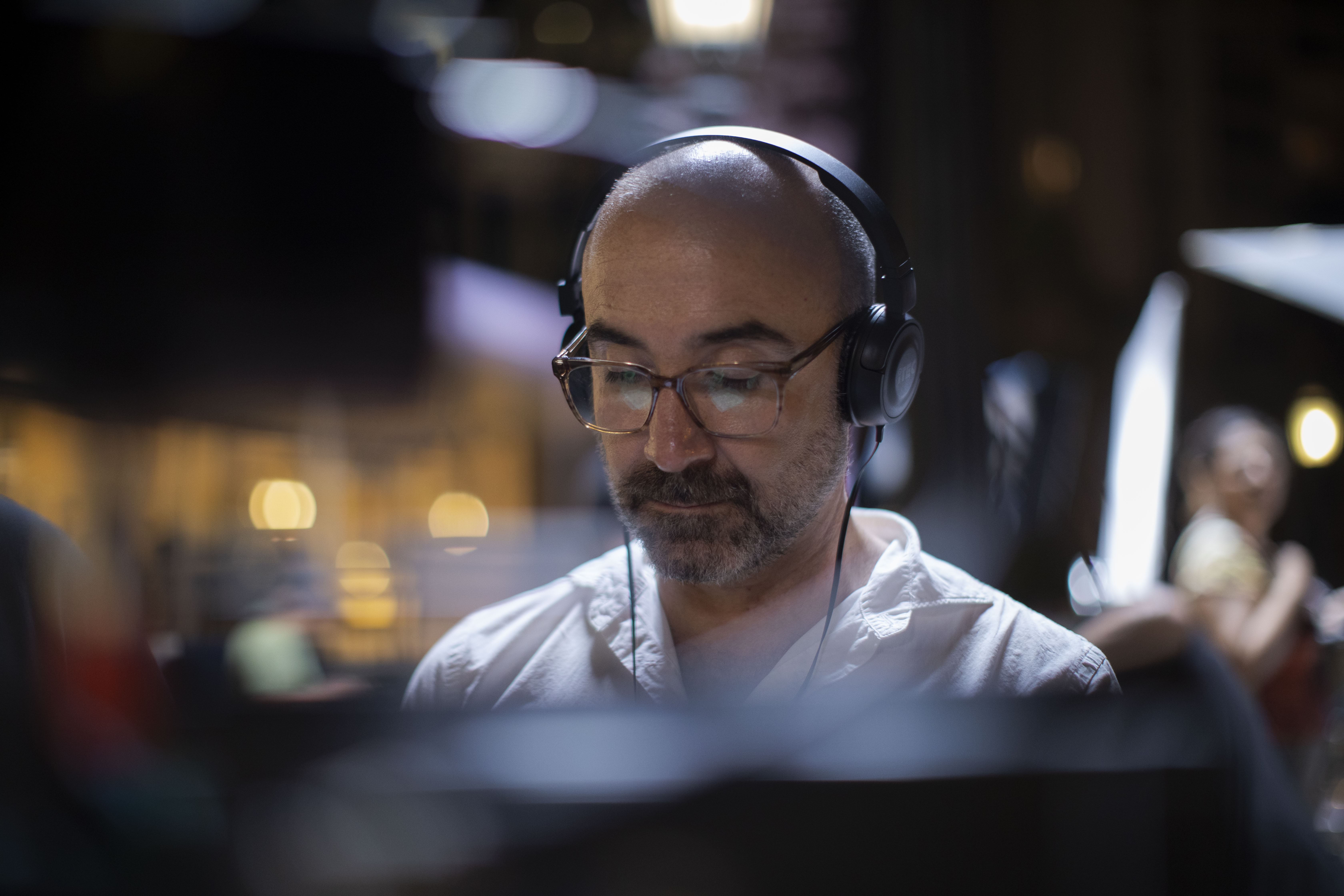
Writer/Director
Born in Lima, Peru, Ricardo de Montreuil is an acclaimed feature film and commercial director who has been residing in Los Angeles since 2005. His early artistic journey began with painting, studying at the Trujillo Fine Arts School under the guidance of the renowned Peruvian painter Pedro Azabache. De Montreuil later pursued his education at the Savannah College of Art and Design, earning both a BA and MA in Graphic Design, along with a minor in Film and Art History. His passion for filmmaking led him to study directing under Judith Weston in Los Angeles.
De Montreuil’s directorial debut, "La Mujer de Mi Hermano" (My Brother’s Wife), based on the novel by Peruvian author Jaime Bayly, was a major success. Acquired by Twentieth Century Fox for
distribution across Latin America and by Lionsgate for US distribution, it became one of the most successful films in Latin American cinema. The film set records, achieving the largest release and biggest opening weekend for a Spanish-language film in the US at the time. His second feature, "Máncora," was selected for competition in the World Drama category at the 2008 Sundance Film Festival and was showcased at several prestigious international festivals, including the Mill Valley, Edinburgh, and São Paulo Film Festivals. De Montreuil gained significant attention with his 2010 science fiction short film "The Raven", which showcased his expertise in storytelling and visual effects. The project topped the industry’s short form Black List and caught the eye of Universal Pictures, where the featur… Read More


 5.0 (53 Reviews)

