How Many Creative Lives Can One Person Live? From Comedy to Opera to Fantasy

 Apple Podcasts
 Spotify
 Amazon Music
 Overcast
 Castro
 iHeartRadio
 PocketCasts
 Castbox
 Podchaser
 RSS Feed
 What happens when a lifelong storyteller refuses to stay in one lane?
In this episode, Michael sits down with Richard Sparks — acclaimed British comedy writer, opera collaborator, and fantasy novelist — to explore a career defined by reinvention, imagination, and the courage to follow creativity wherever it leads.
Richard has written for some of the most iconic comedy voices in the UK, crafted librettos for opera, and now builds entire worlds through fantasy fiction. His journey is a masterclass in artistic evolution, resilience, and the joy of creating without boundaries.
Together, they explore:
The early days of British comedy
How opera shaped his storytelling
Why he shifted into fantasy writing
What it means to reinvent yourself creatively
The craft behind humor, world‑building, and character
The lessons learned from a lifetime in the arts
This is a warm, witty, and deeply inspiring conversation with a man who has lived multiple creative lives — and is still writing new chapters.
Find us on Apple, Spotify or your favorite listening platform; visit us on our YouTube channel Find everything "One More Thing" here: https://taplink.cc/beforeyougopodcast
Want to be a guest on One More Thing Before You Go? Send Michael Herst a message on PodMatch, here: PODMATCH Proud member of the Podmatch Network of Top Rated- Podcasts
This podcast uses the following third-party services for analysis:
Podcorn - https://podcorn.com/privacy
00:00 - Untitled
00:00 - The Reinvention of a Comedy Legend
08:17 - Transitioning to Narrative Writing
15:33 - Transitioning from British to American Television
20:55 - The Evolution of a Creative Career
28:21 - The Challenges of Collaboration in the Film Industry
30:42 - The Journey Into Fantasy: Inspirations and Reflections
42:00 - The Evolution of Storytelling
48:52 - The Nature of Inspiration
51:42 - The Journey of Inspiration
58:57 - Navigating Emotional Vampires
Michael Herst
What happens when a man who helped shape British comedy, who wrote for not the 9 o' clock news, whose Schoolmaster sketch with Rowan Atkinson was just named number one in the Guardians list of Rowan's greatest films moments, suddenly reinvents himself as a fantasy novelist?And what happens when a lifetime of humor, opera, character work and creative risk taking collides with a four book epic filled with duels, kingdoms and sharp wit?Today we're going to answer those questions and so many more when we sit down with a writer who has had lives, has lived, pardon me, who has lived many creative lives and is still writing new ones. So stay tuned. I'm your host, Michael Herst. Welcome to one more thing before you go.Today we're going to pull up a chair for a conversation with someone whose career spans continents, genres and generations. Richard Sparks began in England writing plays, reviews and television, including the legendary not the 9 o' clock news.His Schoolmaster sketch, excuse me.His Schoolmaster sketch, performed by Rowan Atkinson and featured in John Cleese's Secret Policeman's Ball, was recently nominated number one in the Guardians top ten Rowan Atkinson film appearances. He's written for UK television. He moved to Los Angeles to work with the creators of who's the Boss.He directed Jack Black in Hopefully I Want to get this Right, Stravinsky's the Soldier's Tale and written Liberty for the operas produced by the opera.He's an author, he's a brilliant creator, is the author of the new rock fantasy series, a witty, fast paced series of books that blends the unique humor, a surprisingly cultural insight in the rise of older listeners shaping today's creative landscape. Richard, welcome to the show.
Richard Sparks
Thank you for having me, Michael.
Michael Herst
We were talking a little before we started and again, what an amazing contribution to humanity from a creative perspective. So thank you for being here and thank you for being that, that well again.
Richard Sparks
That's, that's very kind of you to say.You know, over a lifetime of writing, you just keep doing the next job that comes along and some work and some less so and some never get done and some become well loved.
Michael Herst
But you get to do, you're passionate about this and you get to, you get to do what you have a passion about and that's, that's unique in this day in life, it's all I.
Richard Sparks
Ever wanted to do was be a writer. I had no idea how to go about it. I think when I was a child I wrote to at least one publishing house.My mum kept the letter badly spelled saying I want to write books and they said, well, let us know when you've written one. Aged 8 or so, 10. And then I discovered that you can make a living writing not the way that I expected.I thought I'd go from university and start writing books. But nobody's going to pay you to do that straight out of college. You've got to, first of all write it, which takes time and you've got to survive.And then you've got to do something good enough to get published. But there is a demand for script writers, screenwriters, comedy writers. There's television, churn stuff out.So if you're lucky enough to get a good agent, which I did, I had a very good agent.She was agent to my friend Douglas Adams, for example, who wrote Fantasy Jo, decades before I did with the Hitchhiker, and various Monty Pythons were her clients. So, you know, small boutique agency. She took me on and got me work and that kept the Wolf from the Door and the Werewolf and.
Michael Herst
And here we are now. How does a lifetime of comedy, opera, television, how's that shape how you built a fantasy world? You talk about fantasy.How does that build a fantasy world?
Richard Sparks
It's all to do with one simple little word, which is wit. You know, it's actually, I think C.S. Lewis or William Empson or someone wrote a study about that word and what it means.You have to keep your wits about you, and wit is intelligence and wit is used as comedy. And it's just.That's exactly the heart and soul of writing, is to keep your wits about you, do what is needful and be open to having ideas and putting in the time and effort to. To learn how to write as well as create the work.You know, some things are natural to writers, like most of us can write good sentences and good dialogue and have. But then the craft of writing took much longer to learn than. Than I anticipated. I thought it would all be just.Just because I could write one good paragraph, everything else would then follow. But, you know, you need to learn. Story structure, for example, is vitally important.
Michael Herst
Well, I mean, it's interesting because, I mean, knowing the screenplay world, knowing the journalist world, My father was a journalist I'd mentioned to you, and I know several novelists as well. And you know, the different writing styles between each one of those is very, very unique within themselves.Was it hard to go from writing television scripts to opera to fantasy?
Richard Sparks
Well, that's a very good point because writing in different styles, different genres, means you have to write differently, even though the rules are the same. For example, the rules are the same in comedy as in tragedy.For story structure, it's just a matter of tone and speed and attitude and mood and things like that. But the story structure of how a story progresses is always the same.But if you go from writing one type of writing, I mean a good, you know, to it into another. A good example is William Faulkner, the novelist who went to Hollywood and was. Wrote scripts and they were terrible.And he would write like four page speeches with one person just talking. And he didn't understand or didn't want to understand or work within the, the constraints of the medium.You know, when I got here to Los Angeles, I was discovered, astonished to discover that from the old days writers and directors would talk about, you write the scenario and then you add the dialogue. I came from a playwriting sketch, writing background and all there is in that is the dialogue. And I thought my wow, this is different.So you have to learn how to think outside the story, that you're right. Structures and synopses.So now when I'm writing my books, for example, I write the book in one file and a summary in the other file and the two together. So I know what chapters are doing what and where I'm going and sometimes how I'm going to get there, but also where the ending is.And that's stepping outside your work, which, which, you know, that took took a long time to learn that that's what the best way of writing is to be. You know, in, in, in novel writing, people talk about, are you a panther or a plotter? Do you fly by the seat of your pants or do you plot?Well, to be honest, you have to do both.
Michael Herst
I find that understanding that especially at least from those perspectives, knowing the structure, you have television script, if it's a half an hour television program, a sitcom or something, it's like, you know, 30 pages kind of a thing. 30 Minutes. 30 Pages. 30 Minutes, 20 pages. That kind of a deal. Movies up to 120 pages or more if you're Martin Scorsese.But the difference between taking something from that level up to a 3, 4, 500 page novel was that difficult to kind of jump into that.
Richard Sparks
Not difficult, but as a learning process. Working with my editor, I've got to give a shout out, Leslie Robin.She's brilliant and I'm eagerly waiting my notes on the fourth book, which comes out in November, for her polish. But this is the conclusion of the series. So we pretty much know what we're doing now between us.But right at the beginning, the amount of work that we put in just on the first chapter. That sets up the entire series, that sets up the entire book, that sets up where you are and what you're doing and how you got there and why.A lot of work. And right at the beginning, she gave me this just great note, which was.I was telling her how nice it was to be writing narrative rather than screenplays or operas, because I have. I'm now telling a story rather than showing it, you know, on. On the screenplay. All you have is the screenplay in an opera.All you have is the libretto. And. And she said, what on earth do you mean? And I said, well, you know, I'm telling a story. And she said, look, go to page 210 or whatever.And so I did. And she went to it and said, look, that's a great scene. Don't tell me, show me. Fantastic note.So I really got the note was, I'm narrating that scene like a reporter telling you what happened. What you need to do is bring it alive for the reader so they're in the moment and you're showing the whole thing in action, in words, so it's both.But showing, not telling is something. I mean, you know, other writers learn this immediately, but for me, that one note coming after a lifetime of script writing was just. Oh, great.Yeah, of course. That's what I need to do.
Michael Herst
Yeah. It is creating. Creating from that perspective in your mind.I mean, I commend you on that because that takes a lot of creativity, a lot of imagination to be able to take what's in your mind, in your heart and then put it on, on paper for other people to really understand and to understand how it comes alive within, within, within the page. It comes alive to them in their own imagination. I'm sure there's got to be very satisfying far world, I think.I think it's a far world from when you were working on the British show, Not the Nine o' Clock News.
Richard Sparks
Yeah, yeah, that was. That was a long time ago now, and it's a sort of an antique piece, but it was great fun to be involved in.Make much credit to John Lloyd, the producer. Sean Hardy, his partner. John was a dear old friend of mine from our university days at different universities, still going strong.He's producing, I think, the 24th series of QI, which he created at the moment, which is a great show. So he put that together and I went to sit in his office right at the beginning, thinking, wow, one of us has got an office at the BBC. This is so.This is so cool. And go there and say, well, what's the show about? And he says, well, it's going to be built around Rowan.Because Rowan was already, you know, the word was out. He was.Nobody knew who he was because the Secret Policeman's Ball hadn't been out, but people had seen him do his student reviews and realized this was a generational talent. And he said, I don't know who else is going to be in it. He said, I met this Australian girl at a party last week. She's amazing.That was Pamela Stevenson, who was, in my opinion, in many ways the best thing in it. She was just a beautiful woman who doesn't mind making a complete fool of herself.Is comedy gold, you know, because a lot of comedians hold back, whether they're a beautiful woman or an ugly man. They hold back a bit so they don't let them completely be laughed at. You're laughing with me, not at me.That's the real next level when you get to do what Pamela did. And I suggested Mel Smith, who was an old friend of mine.In fact, John said the other day when I met him a year or so ago in London, he said Mel was about to give up. He was a director, he worked at the Royal Court. He'd done a wonderful two man show with Bob Goody called the Gambler.And he was just about to go back and work for his father, who was a bookmaker, legal bookmaker in London, get into that business. And John, I said, what about Mel? And John said, oh, that's a good idea.And he called him up and then Mel, of course, and John Toby, he became the glue that held it all together because he understood the business. He was a real, you know, he's a director, he was a thinker about showbiz. He was a complete, you know, sponge. He knew so much about that world.And then when Griff came in, Griff Rees Jones, that was the icing on the cake. And the four of them were a wonderful team. It was fun to be a small part of.
Michael Herst
Well, you know, we, when I grew up, we got to watch stuff like Monty Python and, and some of the other British shows that, that from comedy, the old comedy. I mean, in fact, I don't even think they're available any longer. I've not, at least I've not seen them anywhere available.But those, those sketches, those times, Rowan Atkinson, even, Even Rowan Atkinson, Mr. Bean and everything that he's created in regard to that, you know, I know that it's a different kind of comedy here in the United States, but loved it.
Richard Sparks
It's the same, but different. Some comedy travel, some British comedians go to America, never get anywhere. Others go there and conquer it.Like, the Pythons were immensely successful. They were great. They were big heroes of mine and it was fun working with them, writing.
Michael Herst
With a British comedy from that perspective, what did you. What did that kind of teach your comedy years about timing and human connection?And, I mean, you mentioned earlier, I find it very interesting about the analogy of a beautiful woman or an ugly man. Can't really make fun of themselves. Up to a certain point, they stop.Realistically, did working within the industry teach you anything along that line about humanity and how it's presented?
Richard Sparks
Yeah, I mean, we're all products of the others, you know, we're all products of the. Not the 9 o'.
Michael Herst
Clock.
Richard Sparks
No, excuse me. Beyond the Fringe team of Peter Cook and Dudley Moore and Jonathan Miller. They were all products of. Spike Milligan was their hero.And then the Pythons were products of beyond the Fringe and our generation followed from the Pythons and not the 9 o' clock news went off to do, you know, satirical political comedy rather than surrealist sketch comedy. But they're all very much influenced. In fact, I said to John, why don't we go on from what Python did?Why are we going back to doing satirical comedy? And he said, we can't. We're not nearly as good as them. So basically, he's absolutely correct. You know, Pythons had nailed it. What they did.If we tried to go on in that direction, we. I think they would have fallen flat. Even with, you know, a genius like Rowan at the heart A bit.
Michael Herst
Yeah.
Richard Sparks
So he went off into. Into. Into satirical comedy and it was really successful because, you know, the parents.There are only four channels in England at the time, and the parents were watching the news on BBC1 at 9 o'. Clock. And on BBC2, which had only just started, the cool kids were watching. Not the nine o' Clock News. Taking the piss out of everything.
Michael Herst
That's cool. History. History in action. You moved to Los Angeles to work with Columbia Pictures TV and the creative who's the Boss?I grew up watching who's the Boss too, as well. I am not ashamed to say I still have a crush on Elisa Milano. It's okay. My wife knows. What was that?
Richard Sparks
Won't tell anybody.
Michael Herst
Thank you.
Richard Sparks
Secret is safe with me.
Michael Herst
What was that transition like? I mean, going from British TV to American tv?
Richard Sparks
It was great.I mean, I had an office on the lot and I was sitting there working with Blake Hunter and Marty Cohan, who created the show and were the showrunners on a new show, which never actually got done, which was slightly annoying. After all that work, Columbia bought it, but then they couldn't sell it. They thought they'd go sell it to NBC who had who's the Boss?But that didn't work. But it was. For me, it was a great year sitting on the lot. And then of course, I made connections.I got an agent over here, got work, started doing also and branching out to doing things like writing for the LA Opera, doing translations and original pieces, short ones for ones.And that was another great string to my bow because I worked with a very good composer, Lee Holdridge, who did movies like Splash and Old Gringo, has won tons of Emmys. He's a wonderful, wonderful melodist. Writes real proper tunes, as they say in the old days.So I got to work with him and do some songs in films, for example, and things like that, which is where our mutual connection, Dom DeLuise came and Dom did one of the songs in. In the film that I'd written for it. So. Yeah, so one thing leads to another and you.Every time something doesn't happen, you just pick yourself up and move on and do something that does happen.
Michael Herst
Something that does happen. Yeah. Sometimes you have to wait for it.You know, our daughter's an actor, our oldest daughter's an actor in the industry in la and, you know, understanding the ups and the downs and that your. Your gaps in not working, your continual. Continuously from an actor's perspective, how to continue to.To build your craft and to keep learning because the competition isn't getting any less and.
Richard Sparks
And the work's drying up. It's bloody hard.I mean, being an actor, you've got to be sensitive to the material so that you could completely absorb the material and you've got to have the skin like a rhinoc. To survive the. The. The business that. It's just. You have to be so schizophrenic. I really admire him. And of course, if I'm.If my show is cancelled or I can just sit down with a piece of paper the next day or open a file in my computer and keep working. I don't have to wait. You don't have to wait for the next gig. You can make your own gig.
Michael Herst
Make your own.
Richard Sparks
Make your own job and then sell them later. And people come to you, say, you know that thing you did years ago, I think I might know how to get that done. And you go, right, yeah.Do you want any Rewrites. So you just. I do love the job. And the one thing that I really got to stress about it is you.Nobody's written it before you, certainly not my fantasy books. Nobody's written this particular story where they're going, what they're doing. So you have to figure it.You have to do so much thinking and struggling with it and working and going down wrong alleys and then backing off and looking at the whole thing saying, how does that hold together? And then, and going in there and making it all work and then bringing it to life.It's fascinating, but it's not always, you know, sometimes you're looking at scratching your head and going, yeah, well I know I'm going to get there, but what am I doing stuck here? And why? What direction? So there's so many imponderables to think and you've got to come up with something that's effortless for the reader.So the readers don't see the 9/10 of the iceberg that's under the water and there's no reason why they should. Your job is to do that work, do the suffering.Their job is to pay the 10 bucks with a book or whatever it is and sit back and have a, have an armchair ride and be entertained.
Michael Herst
What I like about you and your career, you know, it's a tapestry of television, opera and libretti and directing lyrics and novels and so forth.You know, my acquaintance with my friends who are screenwriters in the business, the guy who wrote Rush Hour and, and Lethal Weapon and there's a bunch, I won't name them all, but those individuals struggle like that all the time. None of them have delved into all those different doors that you have walked through.Writing for opera, writing for stage, writing a novel and those kind of things. In doing that, in writing liberty for operas produced by LA&LA Opera and, and composing with who you compose with.Do you find stepping in each one of those shoes, putting those different hats on is easy to change? Or does it take you a while to get back into the mode or back into the mood if you have to?
Richard Sparks
I, I don't find it, no. I think if you, once you've got the basics of the craft, you can change your hats, as it were, from being a lyricist to writing long form fiction.It's just whatever excites you. I'm writing something now.I never expected to be writing with an old friend of mine who's written about, I mean illustrated about a hundred books, including graphic novels. There's been many awards And I never thought I'd do one of those, but this idea came up and I think, yeah, this is something I'm interested in.I want this to work. So, you know, you, you work at it and you learn and you consult and you get the job done.But I found that towards, you know, the end of my career is that I can't do anything I'm not interested in anymore.In the old days you would, I'd write for money because somebody was paying me and I would, you know, they'd give me their idea and I would have to do the best I could with it. And sometimes, and you know, you always throw yourself into it with the best will.But over the years you sort of get, you bump up against seeing and then things and then you realize, no, that that's not, that doesn't fit for me.So at some point you start turning work down not because you don't need the, don't need the income, but because it's not something you feel that you can fit with and do very well. I can give a good example, actually. I was thinking about this the other day. It's Duran Duran. There's, I think they're doing a new tour or something.But their manager wanted me to write a film for them and so I went and sat with them abroad, first in Sri Lanka and then in, in France. And they were really nice. The boys are great. I mean, they made me feel very welcome. I was an outsider.But at a certain point it was became quite clear to me that I wasn't able to come up with anything that solved the problems that I saw from a screenwriter's point of view, which was basically they're just all the same in, in character terms. In the five Good Looking Boys, where's the variety?Where's the old witch in the wood, you know, for example, or the kid or the, you know, where's protagonist, antagonist? How does it fit? So I said to Paul at the end that Paul Bero, their manager at the time, and I, I, I'm not the person for this job.I'm not sure what, you know, I tried to write something, I said, I don't. This is very good. Do you? And he said, well, it, not really, it's, he didn't know what he was looking for.And I learned a lot and, and I was very, very impressed with them.But you just didn't, I just wasn't a, when I say it wasn't a fit, it's not in terms of personality or characters or anything, because I would have loved to have had the stuff in me to come up with something that solved the problem that they didn't know that they had or whatever it was. But basically I was saying, look, you don't need me.You don't need this idea that you've had that I'm trying to whack into shape because it doesn't work. Which I think was possibly quite a useful thing to say, in that it might have helped Paul and Michael, his brother, their managers think differently.But, you know, Paul's still a great friend. I see him in London when I'm there. But, you know, that's an example of things that don't work.It would have been great if I'd been the right person for the job and if we'd known what the job was and all that sort of thing.
Michael Herst
Well, and I appreciate the fact that you can. You have the opportunity to say yes and no. You know, like you said you before we were trying to pay bills.You kind of have to take everything that you. They throw at you.
Richard Sparks
And now after a while, it becomes a matter of energy and enthusiasm. If I get excited by an idea, I'll do it. If I don't get excited by an idea, I won't. And it's rare that I turn something down out of hand.I always think, oh, this person, that, that's. I like this person. They want to do this. Let's give it a go.
Michael Herst
Yeah, that's pretty cool. That I'm sure is a really good, excellent way. Position in life to be in, now that you have that opportunity to do it that way.
Richard Sparks
Yeah, I think it's. You've got to be prepared to fail. I think perhaps what I'm saying is you can smell the failures a bit earlier, you know that you wouldn't fit.This wouldn't work, this work. So your enthusiasm goes away and you find you're not thinking about the. The thing that the other person's asked you to think about.And eventually you say, well, I'm not going anywhere with this. I don't think it works because, I mean, as one producer came to me years ago with. He had some song animatronic. Do you remember?This is well before robots and CGI had an animatronic bear, I think it was that had come from Switzerland. He wanted a, like an adventure series with this bear and real actors. This was like 20 or 30 years before Paddington, which was done differently.And I sort of tried to think about it for a bit and then afterwards just, you know, no, I can't think. And this was quite. I was probably in my 30s. I had to say, well look, here's an outline of the story, but I don't think I should be writing it.So yeah, you sort of learn and.
Michael Herst
Look at it now. I mean it, it has so becomes so much integrated within the business of filmmaking and digital filmmaking and creativity.From that perspective, it is like second nature now. And they're having to combat. You know, whether or not you put AI or AI is going to take over for actors.
Richard Sparks
And that's a whole nother conversation yet is another conversation. You should really talk to actors about that.
Michael Herst
Yeah, yeah.
Richard Sparks
It's kind of heartbreaking.
Michael Herst
But. But you directed Jack Black and Stravinsky's the Soldier's Tale. What did kind of. What did that teach you about that?Performance interpretation and creative risk and things like that. Did it, did you walk away with anything from that?
Richard Sparks
Always, always work with good people. You know, there's this whole. In Hollywood now, the whole the New Zealand rugby team have an mantra. No, no.He may be the world's best rugby player, but if you're a. You don't get into the team. And they're the best, most winningest sports franchise in history, believe it or not.But so what I learned from Jack was he had time for everybody. He was a big star then as he even bigger now. All the kids, everyone wanted to talk to him. He time for everyone.He'd give all sign the autographs, he'd chat away. He's this normal California kid who's sat next to his mom at one of the performances.She's a doctor of physics or some amazingly high powered academic. And he was just stunning. I mean he put his all into it. It was, you know, he wasn't getting paid. It was for the Young Musicians Federation Foundation.But it's a wonderful thing to be a part of. And you just get lucky when you work with people like him.
Michael Herst
Well, you know, I've heard of his reputation that it's that stellar reputation in regard to people and he doesn't have the I'm above everybody else attitude. It's like Keanu Reeves. I respect Keanu Reeves for the same reason I have friends in my life.
Richard Sparks
A very genuine person.
Michael Herst
Yeah, yeah, yeah. And coming from that industry, I appreciate that very much.
Richard Sparks
It helps. I mean, look, writers know everything and we're behind the scenes.
Michael Herst
Yeah.
Richard Sparks
We sit in the background. Nobody needs us. Nobody needs you on the set. Because if you need the writer on the set, you're in trouble.Writers like to go to the set and say hello and feel they're part of something cool and groovy and exciting. But, you know, our job's done. Go away. This is the director's room, not yours.Anyway, so sometimes you go and see people and shake hands and have a cup of tea. But be very careful not to say anything to the actors about stuff. That's the director's job, for example.But you, you learn as a writer there's this, you know, there's this whole industry buzz of you don't want to work with her, you don't want to work with him.She has them, she has a sister from hell who comes to the set and pushes everyone around or that that boy's mother is an absolute whatever, you know, the, the, you hear about them. So people don't want to work with them. Sometimes they have to because they're big stars. But usually that's not, not, not.And there are, there are major stars who are, who are, you know, difficult.
Michael Herst
To be like that.
Richard Sparks
To be honest, it seems pointless to me. But.
Michael Herst
Well, that and I think that, you know, our kids grew up in dance competition. From a very young age they loved to dance so we got them into dance competition competitions.And I was, I'm a people watcher, especially as a cop, I watch people. And during that time period I was still a law enforcement officer and I would sit back and watch stage moms.
Richard Sparks
And you would see, aren't they great? I wrote a play for the BBC about that. Again, one that didn't get done down. The direct producer, I think he got sick. It was, it was a super.It was set in a, you know, children's drama school in London and with two best friends. One who goes off and becomes a star and the other one who.It's just a, you know, a short, a one hour play and how they supported each other but didn't. But yeah, that's a, that's a strange world.I wanted to do the other side of it was to show the supportiveness of when the, the, the star and the one who not didn't get the break but her friend got the break and yeah, she's still in. Anyway, I wanted to show that side of it rather than the stage mom thing. But that inevitably came in.
Michael Herst
Oh yeah, I think always, I think it's always going to be there. Your fiction debut was new rock, new role. It launched a four book vanity series. What inspired you to step into the world of fantasy and why?And I asked this for a couple different reasons. I mean, I think from Even from our age perspective, you know, I have nieces and nephews. My kids are 33 and 35 now.But sometimes the fantasy world, I think it doesn't think about us. It only. Let me rephrase that because my mind's going about 12 different directions. It's just flying everywhere.
Richard Sparks
I know that feeling.
Michael Herst
Almost the, with the add squirrel type thing from our perspective, from, from we're older individuals. I still love fantasy. I watch it, I participate as much as I can, you know, from that perspective. But I also have friends of mine that goes. Why? Why?
Richard Sparks
Yeah, that is, it's an odd thing and it's, it's this sense that you're meant to have grown out of fantasy.So, you know, for example, Martin Amos, who was at university with me a couple of years ahead of me in my college at Oxford, he was absolutely obsessed with science fiction. And then he grew out of it, stopped reading it, went on to write proper novels and had a great career.But the oldest books in are literature, fantasy novels or fantasy stories. Go back to Gilgamesh, go the Arabian Nights, the Raman Sita in the Indian library. And Beowulf in English is a thousand years old.It's got dragons and a monster that lives at the bottom of the sea, a lake. And fantasy is absolutely part of our lives and our writing. And look at the 19th century novel.There's Frankenstein at the beginning of it and Dracula at the end of it. And I think for people to poo poo fantasy is actually self defeating because it's just another string to our multi strung literary and cultural bow.It's just, you know, as William Shatner says, science fiction is just human beings in other places.So you can have stories that work in the real world and other stories that wouldn't work in the real world that have to have a new world around them in which you're free to trip out on a different realm. And my inspiration, you asked right at the beginning, what inspired me is my love of gaming.So I was playing, you know, with my earphones on, charging around in a game with 24 people in my ears, all of us getting up to mischief and going off to, you know, this is player versus player as well as player versus environment. And I just thought, well, what would it really be like to be this guy? To be a heroic young battle mage, young with his magic staff and not in a game.But I didn't want to write something set in a game. Although that's, that's popular and has been done. Matt Dinnenman's doing it with his dungeon crawler Carl series. That is a sort of a game.Well, it is a game that's actually inside it. And mine isn't mine.My, my three people win a world championship of gaming and then find themselves separated and stuck in the middle of nowhere, wondering where the hell they are and what are they going to do about it and why. And that's where the adventures start.
Michael Herst
Which is a real unique approach I think, you know, when you come to it from that perspective, because, okay, I'm doing this from a gaming my kids game constantly. My. Our oldest daughter is an avid gamer. She actually does it online, professionally, semi professionally, I guess.
Richard Sparks
Well, if she reads, she, she can, you know, if she reads as well. A lot of people, of course she does don't read. But then she'll really get it because she knows that world.She will understand what, you know, what would it really be like? Because there's a limit. You see, what I loved about gaming was that you're the hero of your own story.You create your own avatar, you go off into a world to do whatever you want at your own pace. Now then when you get to a certain point, you realize there are only two quests.There's a go kill something or go fetch something, we call it kill or FedEx. And then coming through that on the outside, when you go into fiction, my quests are what the fuck is the quest quest? What the hell's going on here?And the hero's got to put it all together and you can't Google the answers like you could if you're stuck in a game and you can't do a puzzle or something, you have to. And if you trust the writer and you like their voice and you feel the sense of this is going, I'm interested. Where are we going?It's like a detective story. Who done it? Where are we going? All these questions going on in your mind when you're into a good story.And that's what I could do in fiction, on the written word, that I couldn't possibly do in a game. But I was definitely. The roots are deep in that spectrum.
Michael Herst
Yeah, that's cool. Very cool. And again, unique approach to it. I think that with a unique approach like that, it gives us something different.You know William Shatner, Star Trek. Star Trek grew up watching Star Trek. Now we're living Star Trek to a certain perspective kind of thing.So, you know, there's something to sticking with fantasy.
Richard Sparks
He's a lovely chap. I had dinner with him about 18 months ago. A friend's house and sharp as attack. Very entertaining.
Michael Herst
Yeah.
Richard Sparks
And I was geeking out on Boston Legal.
Michael Herst
Oh, yeah. I love Boston Legal.
Richard Sparks
That must have been fun because that writer. David o'. Kelly, Is that his name?
Michael Herst
Yeah. David o'. Kelly. David. David Kelly. Not.
Richard Sparks
Okay, David E. Kelly, whoever it is, my hat is off to Chapeau. You know, he's just really great scripts well put together.
Michael Herst
He's. We're watching.
Richard Sparks
I was instructed to call him. Said. Yeah, there's. That was. That was fun, those slips. He's a great writer.
Michael Herst
Yeah, that's very cool. Yeah, we're watching. He's got a series now that called Margo's. Margo's got Money Problems. Oh. On Apple tv. And it's brilliant.And as David E. Kelly, he's married to Michelle Pfeiffer.
Richard Sparks
That's the one. Yeah. Oh, yeah. Thank you for the. Thank you for the steer. I always like it when there's good stuff to discover.
Michael Herst
Oh, yeah, it, it's, it's really, it's. It's good. It's got, it's got the right amount. I mean it. The cast is brilliant. He's blended the right individuals in the right parts for this.And the, the writing is stellar. The story is an envelope shoe. It just takes you in.
Richard Sparks
Thank you. I shall, I shall check it out immediately.
Michael Herst
Your books blend sharp humor with epic stakes. How do you balance the comedy world with world of building without losing the emotional core of a story?
Richard Sparks
As a former, as a recovering comedy writer, I had no idea when I set out to write these. The first story, new Rocky role comes from role playing games. I had no idea that comedy would rear its ugly but entertaining head.I just can't help it. It's. Funny things happen in adventures.It's a natural fit because adventures are all about things going wrong and misunderstandings and disasters and getting stuck up trees or whatever. And, and, and there are just occasions in my stories which are serious stories where the characters are just funny stuff happens.All a funny conversation crops up as they're arguing about some mad triviality on, on the way to somewhere. And you know, because they're all different, the characters are all different, they have their own opinions. They.As the books develop, they start kind of to some extent pranking each other, which is nice, but they're also, they're each other's best friends. It's.I suppose it's a found family kind of book in that these are the friends who always wish you'd really had all your life and you Know the two of them that our hero meets? By the end of the second chapter, they're dragging him off as a slave to sell him into the army.
Michael Herst
Good friends, huh?
Richard Sparks
Yeah. So that's how they meet.It turns out that they come back again and because they've been through thick and thin together, they realize that these are the good guys. And, you know, he. This, this. Okay, he. We treated him badly, but he's been decent to us and my God, we owe him one now.And then they, you know, that's. Those are people you can really trust, people you've been through thick and thin with.And of course, as it is team comedy, to some extent, you don't always want to be dealing with the same people all the time. So the first, it's interesting. The first book is written entirely in first person, narrated by the hero.The second and third and fourth books, much of it is narrated by him, but there are other chapters. When people are going off, the team has to go in separate directions to do different tasks. Those are told in third person.So that was fun, melding those two together.
Michael Herst
I would imagine so. I mean, in the fact that you. I mean, you have created worlds, created characters, created environments, all of your life as a writer.So I'm sure this came pretty naturally to you when it come. When it came to building the worlds that you're building now within this series. And I think that bringing your experiences to that, bringing.Bringing your wisdom, your experience in how you present characters would make it more human.
Richard Sparks
Yeah, there's a caveat. It does come naturally, up to a point, because there's always bits where you don't know what you're doing.And that's when you have to rely on the lessons you've learned from the teachers you've had and the producers you've worked with and the mentors and the experiences that you've learned along the way that. No, if not this, then that. And that's not working. Why? And I'm stuck here. Well, the answer is obviously going to be at least 50 pages earlier.It's not set up properly if I want to pay it up.And all those sort of things have to emerge during the course because, you know, writing a book, you don't just sit down and press control alt N and a novel comes out. You have to do it day by day to write your thousand words a day or whatever it is. And sometimes you get a burst on and you write 5000s.Other times you struggle to get 300 out. But then you just have to have More than one session and do it. So, yeah, it is. It's unknown. Nobody's written it before. You have.You can't look up the answer.
Michael Herst
Yeah, which, which, yeah, exactly. And they. I think the reader can experience that as well. You've spoken about the surprising rite of older gamers.I just asked you about that a little bit ago. How are, how are they influencing modern storytelling, do you think? And what have you have observed about the cultural shift? I mean.
Richard Sparks
Well, yeah, I mean, the roots of storytelling are so deep. They're way, way older than the oldest gamer or the oldest reader alive. They're generations, tens of dozens of generations old.And they're completely ingrained in us. And we've been exposed to them all our lives. Young people growing up these days are exposed to great television from the golden age onwards.And so they're naturally.They're almost like they come out of university as fully full, really top class writers, which a generation before mine had to learn how to do for tv. But they were still really good.I mean, look at the writers on the Sid Caesar show In the early 50s, you know, Mel Brooks, Neil Simon, the great Larry Gilbert, who created mash, the TV series. Yes, and others, and of course, Carl Reiner. So those, they were good writers. They didn't come from nowhere. We're all standing on the.We're all, all the. We're all the products of the others.And that was something that Charles Asnabor, the great French singer, said to me one time when someone asked about, what are your, what are your, what are your inspirations? What are your influences? And he said, we're all products of the others. It is impossible for anyone to emerge fully formed from the forest.It's absolutely right. We're all, we're all. It's a cultural thing that progresses through. And you live and learn and other people.One of the first things you've got to learn is how to take input, how to take other people's views of your work. And that's really important because, you know, you think the first time you start getting notes from people, it's very alarming.It feels like you've been disemboweled. You know, someone's got blue, blue writing all over your script and they're just doing their job. They're trying to get you to improve your job.Once you learn that this is not a personal insult, that we're all on the same side, you go, oh, yeah, absolutely, I can make this better. I see what you mean. Thank you. Go away. Second drafts and you know, of course, if you get notes from an idiot, it's different, but mostly they're not.Most people do have some idea what they're doing and you're lucky to be working with them.
Michael Herst
Yeah, I agree with that. I think that, you know, we. We sometimes don't appreciate those around us that have brought us to where we're at today.
Richard Sparks
Yeah. I mean, everyone wants the credit for everything. It's this great joke in Hollywood here. This is. It's amazing what you can.It's amazing how much you can achieve if you let other people have the credit.
Michael Herst
Yeah, yeah.
Richard Sparks
I mean, it's such a nutty way of thinking, but it is true. Everyone wants to have their name all over it. This is my idea. I know. Who cares?
Michael Herst
It's got where it needed to be.
Richard Sparks
Exactly. It's good work. We're so. Look, nobody knows the schoolmaster sketch was written. This is a good story. Rowan. I. I wrote the sketch for Rowan in 1970.God, when was it? 78. And he did it a year later.He called me up and said, john Cleese has asked me to be in his new show and can I do the schoolmaster sketch, which he'd done in this little theater when we were working on a three man stage show. So I said, of course we can.So years later, I'm sitting in the pub in London, well, my London place, and three people come in, two boys and a girl, I suppose, about 30ish, and said, can I sit here as a table? I was at the table just quietly doing my crossword, you know, having to spend a hard day writing and wrangling our child.And I'm allowed an hour off in the evenings occasionally.So anyway, I was doing the Times crossword and one of them, and they sit there and they're very nice, and one of them says, oh, put it away, Plectrum, which is a quote from the sketch. So I just went, laughed. And they looked at me. I said, I'm sorry, I've never heard myself quoted in public before. I wrote that.And the girl said, no, you didn't. I said, what? She said, no, Richard Curtis wrote it. He's a friend of mine nowadays. I could have said, well, look, let's call him up and ask him.But we didn't have mobile phones. This must have been in the early night. Yes, because our daughter was very small, so slightly odd. So anyway, they got up and left.I said, look, I've got the manuscript around the corner if you want to come. No, Richard's a friend of mine. Now, the reason they thought that Richard wrote it was because when they.When Rowan did his one man show in London, when he was by then a star, it said, written by Rowan, Richard Curtis and Rowan Atkinson, additional material by Richard Sparks, which, for anyone who knows the business.
Michael Herst
Yeah.
Richard Sparks
Knows that additional doesn't mean just dotted I's and crossed T's. It means you've written something substantial for the piece.But why anyone would think that additional material was the star piece of the show, which was his encore piece, which had been in the Secret Policeman's Ball, again, which that no writers were credited in the Secret Police was ball. There wasn't time. So nobody knew except my agent and my friends and Rowan, of course. So that was a bit awkward.And then years later, I'm sitting in that very same pub with John Lloyd, who produced, as I said, not the 9 o' clock news and Black Adder, which was Rowan's show. And what else? Spitting image, you know, qi. He has an incredible career and he's the comic producer of our generation. And I told him this.I was sitting in this room and this happened over there and he said, oh, that's nothing. I was interested in this young lady who became the love of my life for a while. And we wanted to meet where nobody knew us.So we met a long way outside town in some small pub in a village, and they're sitting there having.Getting to know each other and there's people at the next table and there's a guy at the next table who's banging on about how he knows John Lloyd and how John Lloyd's a great friend of his and John Lloyd this and John Lloyd that, and what are the chances, eh? So at the end, John stood up to go. He tapped him on the shoulder.Excuse me, I'm John Lloyd and you're speaking a load of rubbish, but, I mean, that's. That's much better than my story, so. But it's funny how these things happen.
Michael Herst
Yeah, that's great. That's great. We. We had. We had something similar to that. But I'll tell you when, when we're not recording, when we go off.It was pretty funny with Gary Marshall, actually. Yeah, it was pretty cool. You live. You have lived multiple creative lives. What.What does reinvention taught you about identity, curiosity and staying open about the possibility of what's next?
Richard Sparks
Well, you've got to keep an open mind. I mean, again, this is something I just did the other day for the British Fantasy Society for their magazine, A Question and Answer.What I always wanted to know is where inspiration comes from. And if you go to university and ask that question in English literature studies, it's. You'll get poo pooed. You get.Not about, you know, don't talk about that. That's childish. Well, the reason is because they don't know.They're academics and they're looking at the finished work and discovering what's in that, which is a great science in itself. But the actual how it came about and the inspiration, which is what I wanted to know because I wanted to say, how can I get some of that?Where does it come from? But actually, my tutor and I both loved writing, so we talked about it from the inside as writers as well.And I discovered years later that the word inspiration explains itself in that it comes from the Latin spiro, which means to breathe. But whereas expire, breathe out is the same word as to die. Something expires an expiration date, you're dead.Inspiration isn't breathing in, it's into. So, you know, the word in has two meanings in that it's in. So inspiration is the muse outside breathing into your ear.So inspiration comes from out there.So you've got to learn how to keep your eyes and ears open and your mind open and think about what ideas are coming to you and not just wait for inspiration to happen, but actively seek it out if you can. And if you can't, then be more patient.And after a bit, it becomes sort of as if the muse is speaking to you more often than before because, you know, you get feedback from the industry when people say, this is good. I like that. I like working with you. Let's do something else. And you feel validated.That gives you more confidence so that you think, yes, I can do this. This person whose work I like and I admire accepts me as an equal. And you get. It's like your practice muscle. It's like doing a martial art.You go up the belts and eventually you're a black belt and you realize, yes, I can do this. But inspiration does come from out there. So you've got to keep your eyes and ears open and your mind, especially your mind open. But you can train it.
Michael Herst
Yeah, it's brilliant. That's brilliant. Thank you. I think that there's something we should all take to heart, and that's not just in writing or creativity.I think we should take a bit of that in life in general.
Richard Sparks
I believe so. And that's why it's been such a privileged to be able to do this for a living.In that I haven't had to waste my life doing something I didn't want to do, which many, many, so many people, they resent their work or it's drudgery. But I've been lucky enough to. I have. I find it very hard to do toil. I love work. I like cooking.I like cleaning the kitchen after I've done the cooking. I like various other. Benorzik is the word. Tasks around the house. Workman, like. But I won't do the gardening. I'm just not interested. I won't do.I can't change. I can change the light bulb, but, you know, I'm not a handyman. Get somebody who knows what they're doing.My wife's very good, actually, at changing fuses and because she's an artist, so she's used to using tools in her workshop. But no, I don't want to waste my time doing stuff I'm no good at.
Michael Herst
Well, I. And I think that we should all take an approach to life that way.I've had to learn my audience, my community knows that from my own perspective, I had to rein.I mentioned to you earlier, I had to reinvent my purpose in life because I thought I was going to be a cop until I retired and put into a position where I was forced to retire due to an injury I received on the job. I had to kind of learn to adapt and overcome and relearn certain things.
Richard Sparks
Well, it's a dangerous job. I mean, all I'm going to get right is cramp. So, you know, they're on the streets. That's. I can imagine those injuries.
Michael Herst
You know, it was a journey in the journey. The journey taught me several things.It's along the same lines of what you had just said, actually, because I think we can take what you said and apply it to life because, you know, I had to learn how to overcome when I was a cop. You have to learn to have the strength to say, I'm not going to give up.You have to learn to rely on those people around you so that you survive from that perspective.And that's what helped me actually don't want to tear up and walk out of a wheelchair to walk my oldest daughter down the aisle because I was told by five doctors I'd be in one for the rest of my life.And I had to pull upon all of that and pull upon everything that I had learned in my previous profession in all of that in order to stand on my two feet again and accomplish what I needed to accomplish.
Richard Sparks
It's interesting you mentioned the word there that's so important, which is teamwork. The people around you, the people you rely on.It's less in the case of a writer, but there's always a team around, whether it's a production team or just you and your editor and feedback and the readers.When the readers get in touch with me and say they enjoyed this and where's the story going and stuff like that, it really that community, because we are social creatures, that community is what inspires another use of the word inspiration. You know, I put the work out there, it inspires other people. They get in touch with me and that inspires me back again.And this is what good humans do to each other.
Michael Herst
And the fact that, like you said, you got to learn and listen. Yes, learn and listen and grow with that and move with that.With your final book, the New Rock, New roads lady for 2026, what do you hope readers carry with them from the world that you have built?
Richard Sparks
I just hope they, you know, I hope they just enjoy rereading them.When I get people who said, I've read them these again and again, that's lovely because then it's a world that you feel safe and comfortable in at home in. I mean, I have various books that I love that I revisit. Some of them are classics and some of them are science fiction fantasy books.My editor, Leslie Robin Watts, who's thrilled to discover that my writing partner here, composing partners, Lee Holdridge, who wrote the music for Beauty and the Beast, which is her comfort, watch the television series from the 80s, she, whenever she needs it, she switches on a Beauty and the Beast episode. So when she was out here in la, I was able to have them both over to dinner and watch Leslie geeking out on, talking about that show.So, yeah, we all have things that make us comfortable, fulfill us, and that's, that's, that's the good part of life.I mean, imagine being somebody who pillages other people for a living, you know, because there are people like that, scammers on the Internet, for example.
Michael Herst
Yep.
Richard Sparks
Yeah, I, I have this argument a lot with. Because I wrote a couple of books about poker, I love to play poker.And I get some people, young kids who've asked me over the years, should I go and try and be a writer, should I go to Hollywood and try and be an actor or London? I say absolutely, go for it. Because you don't to want to be 80 years old wishing you'd given it a go.You go and learn how to, you May not have a career as an actor, but you'll learn a lot of public speaking skills. You'll learn confidence. Whatever poker players, they say, should I be a professional poker player? And I say, absolutely not, don't.It's a great game and I love it. But you're pillaging other people. You're taking their money to live on. There is an enormous amount of skullduggery in that world.And they're also some of the just greatest fun, most enjoyable people you'll ever meet in that world.And there is, you know, for example, that you might win a tournament when you're a young kid, get a million dollars in the bank, think you know what you're doing, play too big against people who are better than you in cash games, lose the lot, and a year later there's a tax demand from the IRS and you owe $300,000 or whatever the percentages. What do you. Do you work for someone in the. In that, you know, maybe cheating in a poker ring. That's. It has happened.There's a lot of Internet poker is not entirely safe, as safe as it might be. However hard it tries, that's enough.
Michael Herst
That's another conversation.
Richard Sparks
It is within itself derail you, but basically live a good life. If you can live a life that gives to the world rather than take from it. I suppose that's what I'm trying to say.
Michael Herst
Well, I think we all should think that way. We should all give back to humanity. It took me a long time to get out of. I mean, when I was a police officer, I did it because I loved the job.I love to park my patrol car and walk the street and go into the shops and talk to people and, you know, get to know people from a humanity.
Richard Sparks
Yeah, absolutely. Well, there's a reason that cop shows were popular, and one of the reasons is you meet the community and then.
Michael Herst
Exactly, exactly. And I really enjoyed that. And in any other event, my wife will tell you she likes to sit at the table and watch.And I go around and talk to people, you know, and I shake hands and say hello and, you know, shake hands, kiss babies.
Richard Sparks
That's just, you know, this is an important thing. There are two sorts of people in this world. There are givers and takers, and our friends are welcome to anything we got.You want to go and stay in our house? Yeah, go help yourself. Those who don't contribute. But there are some people who just take everything for granted.And those ones who just quietly get rid of them. Or emotional vampires who want more of Your more from you than is healthy. Just get them out of your life. It's not worth the pain.And there are some people who are really generous in this life and get taken advantage of by for example, emotional vampires or, or scroungers who, who are after something as simple as money. They want the easy buck, but those people just, just don't have anything to do with them.
Michael Herst
I, I agree with you. I think that and, and I like emotional vampires. I'm gonna, I'm gonna borrow that if you don't mind.I have some friends of mine that my family, my daughters actually have some emotional vampires. I need to.
Richard Sparks
Yeah, well, they just tell them that. Tell them how. I mean this is a well known pathology and you can research it, but just tell them how to just ease these people out of their lives.Because a lot of them, you know, might have pathological problems towards sociopath, sociopathy, which you would know about as a policeman. And they need victims. Every bully needs a victim and many victims need bullies.Many of these people who sacrifice their lives for other people need to do that. But there's healthy ways of being a public spirited citizen and there are unhealthy ways and unhealthy, particularly for you.If you have an emotional vampire who has their hooks into you.However charming they might be, however much you might think that they are contributing to your life, there comes a point where you just got to break off and go. Well, you just don't answer the phone when they call.
Michael Herst
Ghost them, period. Yeah, yeah, yeah. This. I could talk for another hour.Richard, this has been like absolutely wonderful time but I want to make sure that everybody knows how to find you in these absolutely wonderful books. Can you tell us how we can locate them as well as more about you?
Richard Sparks
Yes. Well, there's a website, richardsparks.com spelt S P A R K S. That's my website. It's got blogs.I do a blog about once every couple of months about things that are going on. And you can contact my scribe goblin there who sends me on the emails. Come, come on in and join.You know, there's also a free chapter available of each book and a free audio chapter with me reading so you can get.Well, there's six chapters up there now out of the three books and there'll be two more when the fourth book comes out so you can get a taste of them and see if you like it. If you're into adventures that are fun, but also a challenge, not without their dangers, please, you know, check them out.
Michael Herst
I Make sure that those are in the show notes as well so that people can just click it and follow you. For those individuals that are listening, for those of you that are watching, obviously you can take a screenshot and write it down pretty quickly.Richard, before we wrap up, this is one more thing before you go, I always ask for words of wisdom. What do you want to make sure our community knows how or what they can do to move their creativity forward?
Richard Sparks
Do what you love. If you love it, you'll. You'll just never stop if you don't like it.You know, I've written there's a manuscript in the bottom drawer somewhere where I stopped halfway down page 285, a typescript. I just thought, who the hell would want to read this? I don't even want to write it. I was trying.In the learning process of being a writer, that is good lesson. Don't write like this. Don't do that. Also, don't try to write like other people. Just write like yourself.But you have to love it because it's demanding. I'm not saying it's punishing, but you will have to put in a lot of work and thought and stuff and that's part of the fun.So if you want to do it well, nobody's going to do it for you. So I look forward to seeing what you all come up with.
Michael Herst
Brilliant, brilliant words of wisdom. Richard, thank you very much for sharing your words, your wisdom, your journey.I really appreciate you contributing to the creative world of how we all fit in it. Thank you.
Richard Sparks
Thank you very much for having me. Michael.
Michael Herst
Today we learned that creativity is an just a single path. It's a lifelong time of chapters.Richard reminded us that humor, curiosity, reinvention and the courage to try something new can shape a life as rich as any fantasy world. That's a wrap for today. I hope that you found inspiration, clarity and a few new perspectives to take with you. If you enjoyed this conversation.Please like subscribe and follow us and and stay connected. You can find us on Apple, Spotify or your favorite listening platform and you can head over to YouTube and find the full video episode.In the meantime, have a great day, have a great week and thank you for being part of this community. Until next time, I'm Michael Herst. This is One More Thing before you go.
Michael Herst
Thanks for listening to this episode of.
Michael Herst
One more thing before you go.
Michael Herst
Check out our website at before you go, yougopodcast. Com.
Michael Herst
You can find us as well as subscribe to the program and rate us on your favorite podcast. Listening platform.
RICHARD SPARKS BIO
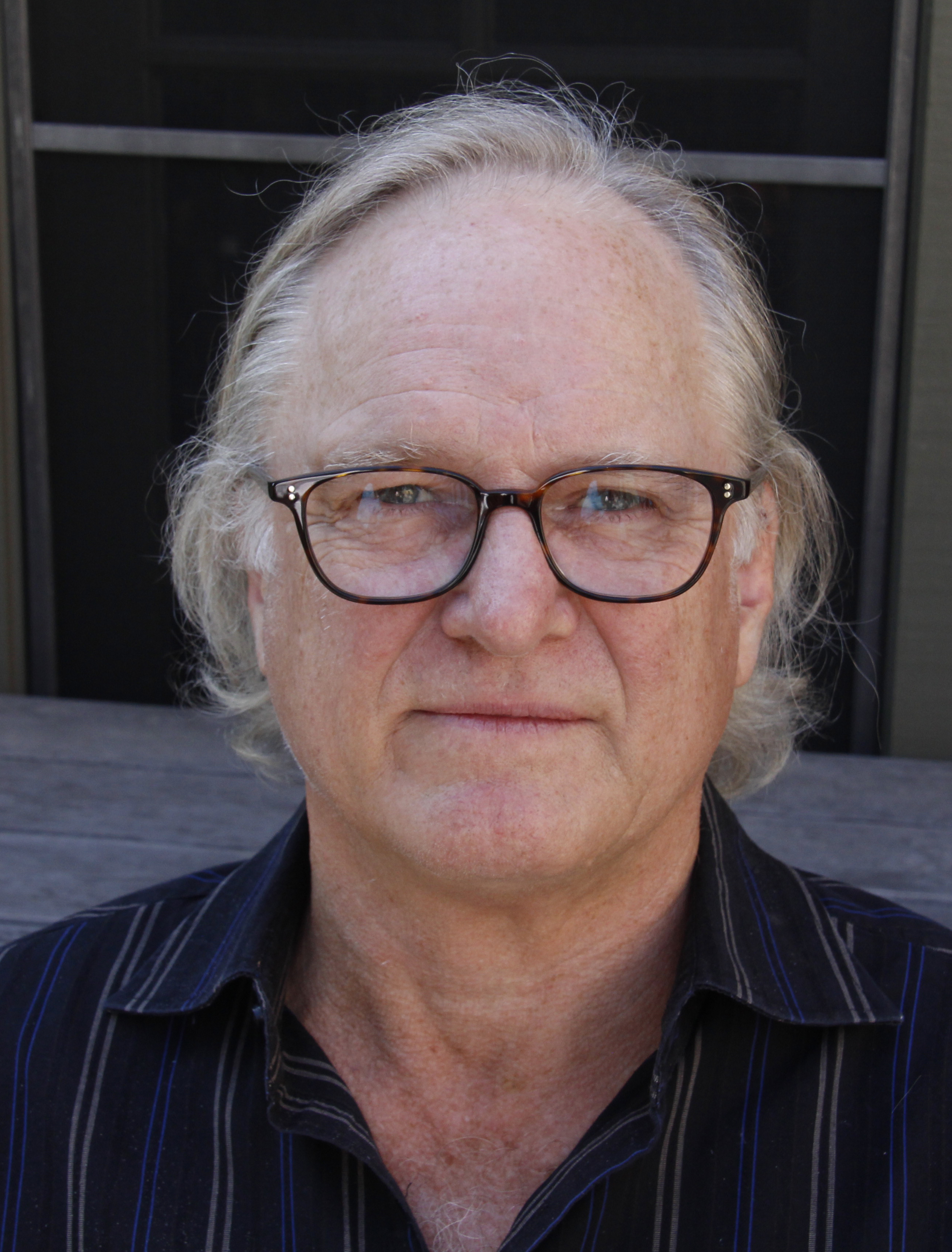
Born in England, and a graduate of Oxford University (Exeter College, where, like both JRR Tolkien and Philip Pullman before him, he read English), Richard Sparks started out as a writer of stage plays, comedy revues and TV, for such shows as Not the Nine o’clock News. Rowan Atkinson performed his Schoolmaster sketch in John Cleese’s The Secret Policeman’s Ball. UK TV credits include The Famous Five, The Flying Kiwi, The Optimist, The Worst of Hollywood, and a lot of script editing. On being hired by Columbia Pictures TV, Richard moved with his family to Los Angeles.
His lyrics have been recorded by talents as diverse as Dom de Luise, Eric Idle, Vanessa Williams and Plácido Domingo. He has written libretti for several new operas composed by Lee Holdridge (TV’s Beauty and the Beast, et al.), produced by the LA Opera, as well writing new English versions of German and Italian classics. His non-fiction books, Diary of a Mad Poker Player, and its sequel, Getting Lucky, chronicle his adventures in the poker boom of the 2000’s. Along the Cherry Lane is his biography of the music producer, Milt Okun. Inspired by his love of online role-playing games, New Rock New Role is the first of four volumes Richard has written so far in the New Rock fantasy adventure series, and is his fiction debut. Full credits at www.richardsparks.com


 5.0 (53 Reviews)

