Wine Discovery Guide for Beginners
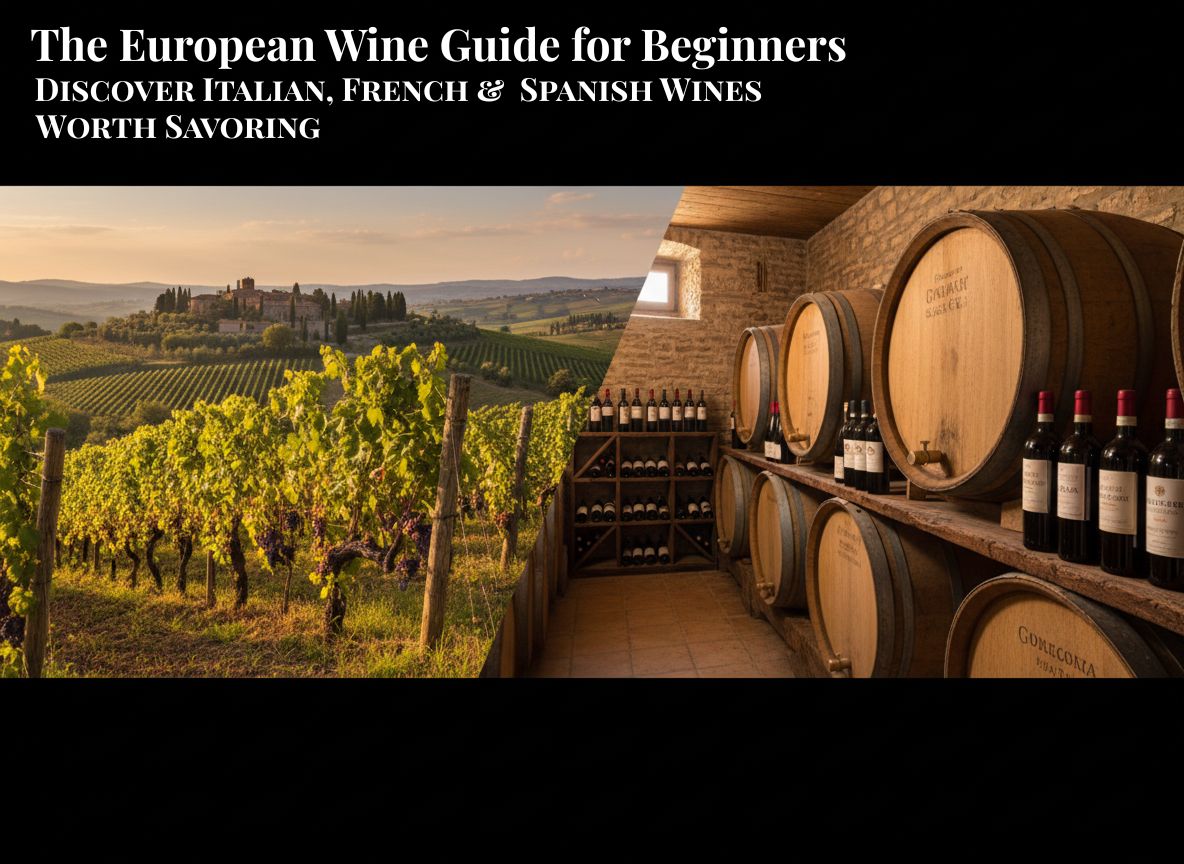
Wine Discovery Guide for Beginners
Introduction
There's a moment every wine lover remembers—that first sip that made them pause, close their eyes, and think, "Oh, this is what everyone's been talking about." For me, it happened with a simple bottle of Chianti Classico on a Tuesday evening.
But here's what I've learned since that moment: the magic wasn't just in the wine itself—it was in the centuries of tradition, the specific hillside in Tuscany, and the winemaker's dedication to honoring the land rather than manipulating it.
If you're just beginning your wine journey, you're about to discover something remarkable: European wines aren't just different from American wines—they're made with an entirely different philosophy, one that prioritizes authenticity, terroir, and time-honored craftsmanship.
Let me be your guide as we explore why these old-world methods create not just superior wines, but wines with soul.
Understanding Tradition vs Intervention
This venture is broken down between Italian, French, and Spanish wines. ( we will go into other regions later on in the series) so before I hand you your shopping list, we need to start with understanding tradition versus intervention—the ancient versus modern approach that determines whether a wine expresses the soul of a place or the skill of a technician.
Michael R Herst
🇮🇹 ITALIAN WINES
White Wines
- Santa Margherita Pinot Grigio (Alto Adige) - $22-26
- Clean, crisp, with notes of white peach and citrus
- Perfect entry point for Pinot Grigio lovers
- Pairs beautifully with light pasta and seafood
- Livio Felluga Pinot Grigio (Friuli) - $18-22
- More complex than typical Pinot Grigio
- Hints of pear and almond
- Great with grilled fish or chicken
- Kris Pinot Grigio (Delle Venezie) - $12-15
- Excellent value for everyday drinking
- Fresh, light, easy to enjoy
- Perfect for beginners exploring Italian whites
Other Italian Whites 4. Gavi di Gavi (Piedmont - Cortese grape) - $18-25
- Elegant, mineral-driven white
- Notes of green apple and citrus
- Sophisticated but approachable
- Vermentino di Sardegna - $15-20
- Vibrant, refreshing Mediterranean white
- Citrus and herbal notes
- Excellent with lighter far
Red Wines
- Chianti Classico (Tuscany - Sangiovese) - $18-28
- Classic Italian red with cherry and earthy notes
- Medium body, not too heavy
- Perfect with tomato-based dishes and cheese
- Valpolicella (Veneto - Corvina blend) - $15-22
- Light to medium body, very approachable
- Red cherry and spice flavors
- Great introduction to Italian reds
- Montepulciano d'Abruzzo - $12-18
- Rich, fruit-forward, excellent value
- Dark berry flavors, smooth finish
- Versatile food pairing wine
- Barbera d'Asti (Piedmont) - $16-25
- Bright acidity, juicy red fruit
- Less tannic, very food-friendly
- Wonderful with pasta and pizza
🇫🇷 FRENCH WINES
White Wines
- Muscadet Sèvre et Maine (Loire Valley) - $14-20
- Crisp, mineral, bone-dry
- Perfect with oysters and seafood
- Refreshing and clean
- Côtes du Rhône Blanc - $15-22
- Aromatic, fruit-forward
- Often blend of Viognier, Roussanne, Marsanne
- Medium-bodied and interesting
- Pouilly-Fuissé (Burgundy - Chardonnay) - $25-30
- Entry-level Burgundy white
- Elegant, with minerality and subtle oak
- Step up in complexity
Red Wines
- Côtes du Rhône Rouge - $12-18
- Classic French bistro wine
- Blend of Grenache, Syrah, Mourvèdre
- Medium-bodied, spicy, very food-friendly
- Bordeaux (Basic AOC) - $15-25
- Look for wines labeled "Bordeaux" or "Bordeaux Supérieur"
- Cabernet Sauvignon and Merlot blends
- Structure and elegance without breaking the bank
- Beaujolais-Villages (Gamay grape) - $15-22
- Light, fruity, can be slightly chilled
- Cherry and strawberry notes
- Very approachable for red wine beginners
- Crozes-Hermitage (Northern Rhône - Syrah) - $22-30
- More affordable Northern Rhône
- Peppery, dark fruit, medium body
- Introduction to quality Syrah
🇸 SPANISH WINES
White Wines
- Albariño (Rías Baixas) - $18-28
- Vibrant, aromatic, coastal white
- Peach, citrus, and floral notes
- Exceptional with seafood
- Rueda Verdejo - $12-18
- Crisp, herbal, citrusy
- Excellent value
- Refreshing alternative to Sauvignon Blanc
- Godello (Valdeorras) - $18-25
- Mineral-driven, complex
- Stone fruit and citrus
- Emerging favorite among wine enthusiasts
Red Wines
- Rioja Crianza - $15-25
- Tempranillo-based, aged in oak
- Vanilla, cherry, balanced tannins
- Classic Spanish red, very approachable
- Ribera del Duero Crianza - $20-30
- More powerful than Rioja
- Dark fruit, structured
- Excellent with grilled meats
- Garnacha (Grenache) from Campo de Borja or Calatayud - $12-18
- Fruit-forward, smooth
- Berry flavors, medium body
- Great value Spanish red
- Monastrell (Mourvèdre) from Jumilla - $12-20
- Rich, full-bodied
- Dark fruit and spice
- Excellent quality-to-price ratio
🍷 BEGINNER'S TASTING STRATEGY
Week 1-2: Start with Whites
- Begin with Pinot Grigio (easiest)
- Move to Albariño or Verdejo
- Try a Muscadet for something different
Week 3-4: Explore Light Reds
- Beaujolais-Villages (lightest)
- Valpolicella (slightly more structure)
- Barbera d'Asti (bright and fruity)
Week 5-6: Medium-Bodied Reds
- Chianti Classico
- Côtes du Rhône Rouge
- Rioja Crianza
Week 7-8: Build Complexity
- Try a basic Bordeaux
- Explore Ribera del Duero
- Sample Crozes-Hermitage
💡 BEGINNER TIPS
Temperature Matters:
- White wines: 45-50°F (refrigerate for 2 hours)
- Light reds: 55-60°F (slight chill, 30 min in fridge)
- Medium/full reds: 60-65°F (cool room temperature)
Glassware:
- Start with universal wine glasses
- Fill only 1/3 full to allow swirling
Tasting Notes:
- Keep a simple journal
- Note: appearance, aroma, taste, finish
- What foods did you pair it with?
Where to Buy:
- Find a local wine shop with knowledgeable staff
- Ask for recommendations within your budget
- Don't be intimidated—everyone started somewhere
Food Pairing Basics:
- White wines → lighter dishes, fish, chicken
- Light reds → pasta, pizza, medium cheeses
- Medium/full reds → red meats, hearty dishes
🌟 TOP 5 "MUST TRY" FOR ABSOLUTE BEGINNERS
- Kris Pinot Grigio (Italy) - $12-15 Easy, affordable, can't go wrong
- Rioja Crianza (Spain) - $15-25 Classic introduction to aged red wine
- Albariño (Spain) - $18-28 Exciting, aromatic, food-friendly white
- Chianti Classico (Italy) - $18-28 Quintessential Italian red experience
- Côtes du Rhône Rouge (France) - $12-18 Best value French red for learning
The Art of European Winemaking: Why Old World Methods Create Superior Quality
A Guide to Understanding European vs. American Wine Philosophy
🌍 THE FUNDAMENTAL PHILOSOPHY DIFFERENCE
European (Old World) Approach: Terroir-Driven
Wine is seen as an agricultural product that expresses a specific place, climate, and tradition. The winemaker's role is to showcase the land, not to engineer a product.
American (New World) Approach: Technique-Driven
Wine is often viewed as a manufactured product where technology and intervention create consistency and bold flavors. The winemaker's role is to control and optimize every variable.
🍇 VINEYARD PRACTICES: WHERE QUALITY BEGINS
EUROPEAN METHODS
Strict Appellation Laws (AOC, DOC, DO)
- Italy (DOC/DOCG): Dictates grape varieties, yields, aging requirements, and production methods for each region
- France (AOC/AOP): Even stricter—regulates everything from pruning to harvest dates
- Spain (DO/DOCa): Controls varietals, aging classifications (Joven, Crianza, Reserva, Gran Reserva
Why this matters: These laws protect quality and authenticity. A Chianti Classico must meet exact standards—you know what you're getting.
Lower Yields = Concentrated Flavor
- European vineyards often produce 30-40 hectoliters per hectare
- Vines are pruned aggressively to limit grape production
- Fewer grapes = more concentrated sugars, tannins, and flavors in each berry
Old Vine Philosophy
- Many European vineyards have vines 50-100+ years old
- Older vines produce fewer grapes but with deeper, more complex flavors
- Root systems go deeper, accessing unique mineral compositions
Sustainable Traditional Farming
- Many European estates have farmed the same land for centuries
- Focus on soil health and biodiversity
- Less reliance on chemical interventions
- Organic and biodynamic practices are increasingly common
AMERICAN METHODS
Fewer Restrictions
- AVA (American Viticultural Area) system is much less restrictive
- No regulations on yields, grape varieties, or winemaking techniques
- Focus on brand and winemaker rather than place
Higher Yields = More Volume
- American vineyards often produce 60-100+ hectoliters per hectare
- More grapes per vine = diluted flavors
- Focus on quantity and consistency
Younger Vineyards
- Most American wine regions are less than 150 years old
- Vines are often replanted every 25-30 years for efficiency
- Less complexity from younger root systems
Industrial Agriculture
- Irrigation systems are standard (often illegal in Europe)
- Chemical fertilizers and pesticides more common
- Mechanical harvesting more prevalent
🍷 WINEMAKING TECHNIQUES: THE CELLAR DIFFERENCES
EUROPEAN TRADITIONS
Minimal Intervention Philosophy
- "The wine makes itself" mentality
- Fewer additions, less manipulation
- Natural fermentation with indigenous yeasts common
- Goal: Express the vintage and terroir
Traditional Fermentation
- Wild/indigenous yeasts from the vineyard and cellar
- Slower, more unpredictable fermentations
- Creates more complex flavor profiles
- Each vintage tastes different (reflects the year's weather)
Aging Traditions
- Large oak casks or neutral barrels (Italy, France)
- Extended aging requirements by law (Rioja, Chianti, Barolo)
- Concrete or clay vessels (ancient methods returning)
- Goal: Integrate and refine, not overpower with oak
Sulfite Usage
- Generally lower sulfite additions
- Many producers use minimal SO2
- Organic and natural wine movements strong in Europ
Blending Heritage
- Traditional regional blends perfected over centuries
- Bordeaux: Cabernet Sauvignon + Merlot + Cabernet Franc + others
- Châteauneuf-du-Pape: Up to 13 grape varieties allowed
- Chianti: Sangiovese + traditional companions
- Complexity through diversity
AMERICAN TECHNIQUES
Interventionist Approach
- Technology-driven winemaking
- Heavy use of additives and adjustments
- Controlled fermentation temperatures
- Goal: Create a consistent product year after yea
Controlled Fermentation
- Cultured commercial yeasts selected for specific flavor profiles
- Temperature-controlled stainless steel tanks
- Predictable, fast fermentations
- More uniform results, less vintage variation
Oak Program
- New American or French oak barrels (expensive but impactful)
- Shorter aging periods with more aggressive oak influence
- Oak chips, staves, or powder sometimes used for flavor
- Goal: Add vanilla, toast, and spice flavors
Chemical Adjustments
- Acidification or de-acidification common
- Sugar additions (chaptalization) in some regions
- Water additions to reduce alcohol
- Tannin powders and enzymes
- Higher sulfite levels for stability
Varietal Focus
- Emphasis on single-grape wines (Cabernet, Chardonnay, Pinot Noir)
- Marketing driven: "Napa Cab" or "Russian River Pinot"
- Boldness over subtlety
📊 SIDE-BY-SIDE COMPARISON
Aspect | European (Old World) | American (New World) |
Philosophy | Terroir expression | Winemaker expression |
Regulations | Strict appellation laws | Minimal restrictions |
Yields | 30-40 hl/ha (lower) | 60-100+ hl/ha (higher) |
Vine Age | Often 50-100+ years | Typically 10-30 years |
Irrigation | Generally prohibited | Standard practice |
Fermentation | Wild/indigenous yeasts | Commercial yeasts |
Oak Aging | Large/neutral casks, longer aging | New barrels, shorter aging |
Additives | Minimal intervention | More adjustments |
Alcohol Levels | 12-13.5% typical | 14-15%+ common |
Style | Elegant, balanced, food-friendly | Bold, fruit-forward, powerful |
Vintage Variation | Significant (reflects year) | Minimal (consistency goal) |
Sulfites | Lower levels | Higher levels |
🏆 WHY EUROPEAN WINES ARE SUPERIOR IN QUALITY
1. Authenticity and Place
European wines tell you where they're from, not just what grape they're made from. A Barolo tastes like Barolo because of the Nebbiolo grape, the fog, the soil, and centuries of tradition. An American Nebbiolo tastes like... the winemaker's style.
2. Complexity and Nuance
Lower yields and minimal intervention create layers of flavor. European wines reveal different aspects as they breathe, warm up, or age. American wines often show their best immediately but lack evolution.
3. Food Pairing Excellence
European wines are made to complement food, not dominate it. Their balance of fruit, acidity, tannin, and alcohol makes them versatile at the table. American wines can overpower delicate dishes.
4. Ageability
Thanks to better structure and balance, many European wines improve with age. A $25 Chianti Classico can age 10-15 years. Most American wines at that price point are meant to drink within 2-3 years.
5. Value and Tradition
You're buying centuries of knowledge encoded in every bottle. European wine regions have spent generations figuring out what works best in their specific terroir. American wine regions are still experimenting.
6. Lower Alcohol
European wines typically have 12-13.5% alcohol vs. American wines at 14-15%+. This means:
- More refreshing, less fatiguing
- Better for multiple glasses with meals
- Truer expression of grape and place
7. Sustainable Practices
European producers have farmed the same land for generations. They can't afford to deplete the soil or damage the ecosystem. Sustainability isn't a marketing trend—it's survival.
🌱 SPECIFIC REGIONAL ADVANTAGES
ITALY: Diversity and Heritage
- Over 400 indigenous grape varieties (vs. ~50 commonly used in America)
- Ancient winemaking dating to Etruscans and Romans
- Family estates passed down through generations
- Volcanic soils (Etna), limestone (Tuscany), clay (Piedmont)
- Sangiovese, Nebbiolo, Barbera, Aglianico—grapes found nowhere else
FRANCE: Precision and Refinement
- 2,000+ years of winemaking evolution
- Concept of "terroir" originated here
- Burgundy: Individual vineyard plots (climats) mapped since Middle Ages
- Bordeaux: Perfected art of blending for complexity
- Champagne: Invented méthode champenoise
- Most imitated, rarely equaled
SPAIN: Tradition Meets Value
- Ancient vines (some pre-phylloxera, 100+ years old)
- Extended aging requirements (Reserva, Gran Reserva)
- High-altitude vineyards produce elegant wines
- Tempranillo, Garnacha, Albariño—indigenous excellence
- Exceptional quality-to-price ratio
🔬 THE SCIENCE OF TERROIR
What Makes European Terroir Special?
Soil Diversity
- Limestone in Burgundy creates mineral elegance
- Volcanic soil in Etna adds smoky complexity
- Slate in Mosel produces racy acidity
- Gravel in Bordeaux provides drainage and heat retention
Climate Stability
- Mediterranean and continental climates perfected over millennia
- Marginal climates (Burgundy, Northern Rhône) produce more interesting wines
- Vintage variation is a feature, not a bug
Microbial Terroir
- Indigenous yeasts unique to each estate
- Bacteria and fungi in ancient cellars
- Biological complexity impossible to replicate
💭 THE PHILOSOPHICAL DIFFERENCE
"A great wine is made in the vineyard. The cellar work is just to avoid mistakes."
- Wine as agricultural art
- Respect for tradition and place
- Patience (some wines aren't released for 5-10 years)
- Each vintage is unique and precious
American Perspective:
"A great wine is made in the cellar through skill and technology."
- Wine as manufactured product
- Innovation and experimentation
- Consistency is king
- Every vintage should taste "perfect"
🎯 WHAT THIS MEANS FOR YOUR WINE JOURNEY
Why Start with European Wines:
- Learn True Balance: European wines teach you what wine should taste like—balanced, elegant, food-friendly
- Develop Your Palate: Subtlety and complexity train your senses to appreciate nuance
- Understand Quality Markers: Learn to identify terroir expression, proper acidity, and aging potential
- Appreciate Authenticity: Experience wines that couldn't be made anywhere else
- Get Better Value: $20-30 European wines often outperform $40-60 American wines in complexity and ageability
When American Wines Work:
- Bold, fruit-forward styles for cocktail hour
- Immediate gratification (drink now, not later)
- Consistent house wine for parties
- Learning about winemaking innovation
📚 FINAL THOUGHTS
European winemaking isn't "better" because it's older—it's better because centuries of trial and error have identified the best grapes for specific places and the best methods to express them.
American winemaking has its place and has produced some world-class wines. But the philosophy of consistency over character, technology over tradition, and power over elegance creates wines that are often impressive but rarely profound.
When you drink a European wine, you're tasting:
- The specific hillside where the grapes grew
- The weather of that particular year
- Centuries of accumulated knowledge
- The hands of a winemaker honoring tradition
When you drink an American wine, you're often tasting:
- The winemaker's technical skill
- A formula perfected in the lab
- Marketing decisions about oak and ripeness
- A product designed for immediate appeal
Both have value. But only one has soul.
🍷 Salute to your continued wine education journey!
Michael Herst
https://beforeyougopodcast.com
Find us on Apple, Spotify, or your favorite listening platform

Podcast Host | Media Producer | Keynote Speaker | Course Creator
I am a multi-talented Podcast host and producer, keynote speaker, author, director, and retired Police Sergeant, best known for my captivating work in the podcasting world.
My educational background includes an M.A. in Interdisciplinary Studies with a focus on Performance and Digital Media, as well as a B.S. in Business Management. These qualifications provide me with a unique perspective that infuses creativity and innovation into all my projects.
As a devoted family man, animal advocate, and vegan, My passion extends beyond my professional pursuits. My experience as a veteran podcaster allows me to engage in thought-provoking discussions across a wide range of topics—from pop culture to the metaphysical.
Through my weekly Society and Culture Podcast, aptly named “One More Thing Before You Go,” (in its 5th year with more than 400 episodes) I invite listeners on a captivating journey through life, culture, and the mysteries of the universe.
My impact extends beyond the airwaves as I have developed two International Film Festivals and organized five Screenwriting Conferences, bringing together Hollywood industry professionals to impart their knowledge on developing, pitching, and selling movie and TV screenplays. My commitment to storytelling and creative expression shines through in every project I champion.
So, whether I'm behind the mic or orchestrating industry events, my velvety voice talent and expertise resonate, leaving audiences with that “One More Thing Before You Go”—a memorable takeaway that enriches their under…Read More

Lights, Camera, Oscars! A Look Ahead at the 2025 Academy Awards



 5.0 (53 Reviews)

